Print this article Print this article

A quick guide to identifying some hedgerow fruit

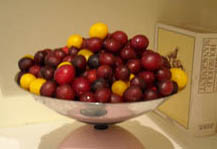
Photo: Wild cherry plums

Photo: Wild cherry plums

I’ve had quite a few emails recently about identifying hedgerow fruit so I thought that it might be helpful to post some of the pictures that I have. Sloes, wild damsons, wild cherry plums and bullaces all came from the same family – albeit distant relations. They all have stones and the bushes have similar leaves.
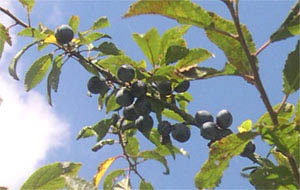
Photo: Sloe on a branch

Photo: Sloe on a branch

The main problem seems to be differentiating sloes and wild damsons as they are both small and dark. Sloe bushes have sharp thorns and wild damson trees do not. Damsons have longer stems so hang and look more like a tiny plum. Sloes have shorter stems and hug the branches more.


Steve pointed out (see comments) that sloes can be confused with Deadly Nightshade – you can see some photos Deadly Nightshade photos here.

 Wild plums taste like domestic plums (from sharp Mirabelles to sweet Victorias). Wild bullaces taste like greengages. Wild damsons are very sharp and sloes taste almost bitter.
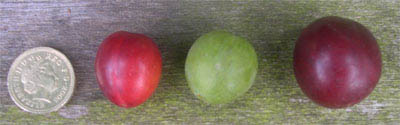
Photo: Wild plums and bullace

Photo: Wild plums and bullace

Of course the best pocket guide to hedgerow foraging is Richard Maybe’s Food for Free (Collins GEM). It’s now on offer on Amazon for under £3.00.

Related Posts with Thumbnails

33 Comments so far

  1. Steve on September 11th, 2009

    I have always understood that the problem with Sloes is mixing them up with Deadly Nightshade fruit when picking in the wild.

  2. fn on September 11th, 2009

    Hi Steve

    Thanks for that. I’ve updated the post and put a link to some photos.

    I’ve never seen this plant/

  3. magic cochin on September 11th, 2009

    This is very useful Fiona.

    You say that sloes have thorns and damsoms do not, this could be confusing as the old true damsom which sends up suckers (shoots from the ground that are the same as the parent tree) does have long sharp tipped twigs – like giant thorns.

    The newer commercial damson varieties, like ‘Merryweather’ have been crossed with another plum species and produce slightly larger, less intensely flavoured fruits and don’t spread by sending up suckers.

    I think if you find a damson in a hedgerow it would be more likely to be the old type with smaller, darker fruit and the tree will have large sharp thorns.

    Planning to pick our damsoms later today – and I’ll be taking care not to get stabbed!

    Celia

  4. fn on September 12th, 2009

    Hi Celia

    Thanks for that. There’s so much to learn!

  5. James P on September 12th, 2009

    WRT thorns, while some sloe (blackthorn) bushes are ferociously prickly, I have met a few that weren’t so bad, and which fooled me into thinking they were damsons. I wrote a bit about this here:
    http://www.cottagesmallholder.com/?p=37#comments

    We’re going back this afternoon to have another look, as I sure some of them were damsons!

    BTW, I know it should be obvious, but I assume that’s a Pound coin in the photo, and not a 5p..?

  6. fn on September 12th, 2009

    Hi James

    It’s a pound coin.

    BTW when this photo first appeared on the blog I though the smallest fruit was a wild damson (not matured) WRONG. It’s a wild plum of a miniature variety!

  7. ilona on September 12th, 2009

    First can I say how useful your website is.
    I’ve been trying to identify some hedgerow fruit and this ids the only place I have found any useful info.
    At first I thought I had damsons, growing in the hedgerow near our allotment, but they are not black/blue enough, and are round, rather than oval, not a lot bigger than a pound coin.
    There are two or three trees, no-one seems interested in the fruit, so it looks like I am going to be busy making jam/chutney/wine and whatever else I can find a recipe for.
    BTW I’m glad you ceared up the pound coin versus the 5p….I thought it was a 5p!!!!

  8. Lee on September 14th, 2009

    We have a tree in our garden which I thought was a small plum tree but My Mum said it could be a damson. It never bore much fruit until this year, this was due to us chopping the top half off last year. My husband was going to take it out completely but I said lets wait and see what it does after this, if it fruits we’ll keep it and if it doesn’t then it can go. Lucky for me and the tree it did very well after producing loads of fresh branches. I’ve made lots of jam and have just started a batch of damson vodka. This is my first batch of fruit liquer so wish me luck. I’ve also just spent an hour this morning looking for sloes and have managed to find them. They are not the easiest things to find and there were not many on the branches. I’m glad I didn’t wait till October, I think everyone else beat me to it. I’ve kept some of the shriveled up berries to plant in some compost and see if they grow, then I’ll have some in my garden all to myself! Your site is very exciting and useful! Thanks

  9. Ceri on September 14th, 2009

    Is it me or are sloes going over early. I am in the Vale of Glamorgan. I took a walk out last week to my sloe collecting place and they were shriveled. I have now pick some nice plump ripe ones. Also the wild plumbs I picked were also ready. I am new to this site and I think its just great.
    Ceri

  10. fn on September 15th, 2009

    Hi Ilona

    Thanks for dropping by.

    Richard Maybe’s book is well worth getting hold of. I keep mine in my bag at this time of year and it come in very handy.

    Hi Lee

    Yes sloes are early this year. I must get out and try and find some before they’re all gone.

    Lucky you, I’d love a damson tree.

    Hi Ceri

    Plums and sloes are early this year. Great that you are enjoying the site, thanks for leaving a comment.

  11. Colm on September 15th, 2009

    Sloes come from the blackthorn bush
    and haws(red berries) come from the whitethorn bush. At least thats what we call them in Ireland.
    If you see a sloe it has an almost pastel purple
    apperance, but if you rub it,it reveals a dark
    Purple/Blue skin.

  12. fn on September 15th, 2009

    Hi Colm

    Thanks so much for this input. Much appreciated.

  13. Diane G on September 15th, 2009

    I’ve just returned from a few days away in sunny Cornwall. While we were there we decided to walk around the headland at Port Isaac, taking the inland walk to Port Quinn. However, we never did finish the walk as on the way we found these wonderful, rich, plump sloes, so out came the plastic bag – and the rest is history – or will be in a few months time when the Port Isaac Sloe Gin will be ready. Then we will remember the wonderful sunny day and fabulous views of the North Cornwall coastline!

  14. Chloe on September 18th, 2009

    Two fab finds in one day – a friend and I went a-foraging in our Kent village this morning and discovered a narrow lane full of sloes, wild damsons and bullace(we were fortunate to have with us a team of keen toddler fruit-pickers) I had bullace trees in the garden I grew up in but my parents never did anything with them so I set out to discover what should best be done with such bounty & found this site – not sure which find I’m more excited about!

  15. ilona on September 21st, 2009

    a week or so on and after several pickings and closer inspection, I have decided that the fruit I have been picking are indeed sloes. They look like damsons but are round. What threw me was the size of them, they are MUCH bigger than a £1 coin, especially on the sunny side of the bush(I had to navigate a rather precarious fence to reach it, but it was well worth it!)Also, I thought there were no thorns, but they found me, and are also pretty huge. I always thought sloes were much smaller…more like big blackcurrants!!

  16. sloe on the uptake on September 28th, 2009

    MY FOLKS PICKED ME SOME SLOES AND THERE WERE SMALL (WHICH i took to be sloes proper), large (like, gobstopper size) which I took to be black bullace, and medium. What were these? They taste sry like sloes but won’t fit in the neck of the gin bottle? Wild plum?

  17. Joanne on September 29th, 2009

    This is such a good site!

    But re the sloe versus damson issue, I had long been a little disappointed to think that a tree I had was wild damson rather than sloe, albeit never too certain either way. It fell last year, though, and is now leaning on a peculiar, just about surviving, pear tree that produces a few big but totally inedible (not even cookable) pears. Half of the damson tree is still alive though, and it has still fruited relatively well, although not like usual. There are smaller young trees in the vicinity, so I am not worried that it is lost. But I am thinking they are all obviously suffering from being in too heavy shade there, from too much hazel (should be chopped/coppiced). From foraging efforts, are damsons seen to prefer bright situations or semi shade?

    But having decided that I didn’t think they were sloes, because they are oval rather than round, and nowhere near so sour that you can’t eat them as they are, I am now delighted to think that they are more rare than the sloe. I was still somewhat perplexed at being told that the wild damson doesn’t have thorns though, because mine certainly does. So thank you very much for the clarification above that that is right. They’re not standard type thorns, and are not many in number, but are quite lethal individual very long spikes.

    I have got cherry plums as well, which I hadn’t been sure were wild or not, but I would love to put some bullaces (which I had had no idea were wild greengages) in as well. Does anyone know where one might be able to acquire one to buy?

  18. KateUK on September 30th, 2009

    Sloes really do look blue- they have a very strong ‘blush’ that makes them easy to identify. I suspect they are shrivelling early as there has been so little rain to keep them plump as they are not usually ready to fall until after the first frosts.

  19. Joanne on September 30th, 2009

    I’m confused again now. I collected some of whatever damson/sloe fruit it is that I have this afternoon. And there is no question that many of them have a strong bloom and do actually look quite blue. But then ordinary damsons and other dark plums, let alone the wild ones, can have a bloom as well. So is that correctly really indicative only of sloes?

    There are lots of scrubby related things growing where mine are, and I must admit that I noticed that one of them, at least, might be slightly different. Most of what I now think are wild damsons seem to want to grow into rather leggy small trees with the odd very long individual sharp spine (I only found one on looking for them). The fruit, then, is oval and looks exactly like a small damson, for all many do have a bloom and do look quite blue, and apropos the picture and advice above, they have reasonably long stems as well. And when I was picking them today, I was stuffing a good many into my mouth as I was doing so. They are not terribly sweet, but they are certainly not sour and they are are very pleasantly edible as they are, albeit quite intense.

    The other related growth there is there seems more bush like in form, and has never fruited abundantly in the same way. That seems to have rather more spines too, and much shorter, although it could still never really be described as thorny as, say, hawthorn is. There were two lone fruit that I could see, neither of which had any bloom left but which did happen to be a bit smaller and rounder and the stem happened to be shorter too. And when I tried them, they were really quite sour and slightly set my teeth on edge. I wouldn’t go on eating those. It could be that they were just small round variations of the same thing that didn’t happen to be as ripe. But on the other hand, maybe that is a sloe that just doesn’t fruit well, hence hasn’t been noticed before. There was a reference to sloes being like deadly nightshade and those two single fruits could indeed be descibed as quite similar, whereas the much more prolific others (if actually different) really couldn’t be.

    But given all growing in the same place, albeit in what must be a pretty ancient copse, one would assume that they are all related. If they ae not, does anyone know if sloes are more affected by pretty heavy shade, which would explain not fruiting? And is there not an argument that they are all pretty closely related anyway and that there may be variations that span the divide?

    The advice of anyone with practical experience of identification of both would be hugely appreciated. Thanks

  20. roger on October 16th, 2009

    i live in kent uk and all im seeing this year are wild plums sloes and damsons.we have made damson jam and i before i found this site have made damson vodka im just hoping i havent put to much suger in.its now 16-10-09 and when im driving round i say to wife look at all those damsons up high but im working on it . i wont to try your recipe , this is a great site glad i found it

  21. fn on October 16th, 2009

    Hi Roger

    Taste the damson gin. If it’s too sweet halve the gin and sugar bit and add more damsons, gin and no sugar. Keep on doing this until it tastes right.

    Great that you are enjoying the site.

  22. Amanda on November 1st, 2009

    Some bullaces are like greengages, others are more like larger sloes.

    Tasting them helps ID them. If they make your mouth dry up instantly with the sheer sour flavour, they are sloes. If they are still fairly not-nice to eat, but not that bad, they are black bullaces. If they are intense, but nice, they are wild damsons.

  23. Lisa on November 29th, 2009

    A few years ago my best friend made me some cranberry gin for Christmas, I would love to return the gesture with some sloe gin. I have recently moved to Norfolk and keep coming across buses full of what I think are sloes. However, I’m very scared of mixing them up with either deadly nightshade or some other poisonous fruit – apparently that is the biggest cause of poisoning in Europe. Can anyone recommend a sure fire way to for me to identify sloes?

  24. Yvonne Morrison on August 17th, 2010

    Hi Guys
    great advice on the plums/cherries. We have a tree on our road with the plum/cherry next to the 10p piece. We thought they were damsons. Here’s a fab recipe we made up using them.

    250 g stoned and skinned plums including the juice(drop into boiled water and the skins slip off)
    6 eggs
    225g caster sugar
    250g ground almonds

    skin stones as described above saving juice
    beat eggs and sugar until fluffy
    add almonds and beat
    add plums and beat.
    pour into greased and lined spring from cake tin
    into oven 200 degrees centigrade for 50 minute or until knife comes out clean
    watch point: cover with greased paper when skin forms on runny mixture or it will burn – mixture is very runny, but it comes out beautifully

  25. Susanne on August 29th, 2010

    The sure fire way to identify a plant unknown to you is to use plant identification book or key. For plant identification in Britain I would recommend “The Wildflower Key” by Rose and O’Reilly. As plant descriptions are detailed you would be able to use the rule on the back of the book and instantly see the difference in leaf size between deadly nightshade, damsons and sloes, also note that damsons and sloes are small trees that have woody branches while deadly nightshade is herbaceous. Foraging guides are good for letting you know what part of something is edible when, and unless you know the plant are best accompanied by a more technical plant identification book.

  26. Aprilbell29 on September 7th, 2010

    Hi there – I am new to picking. I think I have found sloes but I am very confused by the conflicting information on the internet. The fruit I have found are small, have a stone inside, the leaves and description match that of a sloe and when i bit it it dried my whole and was bitter….but the branches have no thorns…can anyone help? could these still be sloes even without the thorns? Any guidance would be very very much appreciated :-) Thanks in advance…

  27. ashatch on September 20th, 2010

    I too picked fruit exactly how you describe, aprilbell29. Not sure what to do with the 2lb I picked…

  28. sylvia on September 21st, 2010

    found some green sweet fruits and can only describe them as greengages but wild so have look onto your sigh to give answers , the tree is about 20 ft high and we picked 1lb 10 oz as some have already dropped the tree is only about 6 inches in diameter and we have never seen the fruits here before they are very lovely

  29. ipso-phyto on April 28th, 2011

    I would strongly argue that Richard Maybe guide to food for free is simply an exploratory delve into a mostly unknown treasure trove.
    For instance i see no mention in this book or even Roger Phillips’ wild food book of the pre-flowering stems of Cow Parsley, Anthriscus sylvestris also known as wild chervil. These stems, once the outer peel has been removed (easily by teeth, fingernails or knife) are eaten raw or could be ever so lightly blanched or steamed. The taste is a cross between a carrot and mild fennel. Base and middle note flavours rather than top notes. Gorgeous. Thankyou to Robin Harford of eatweeds for showing me that.

  30. Sue Harding on July 29th, 2011

    Having picked bucketfulls of cherry plums from my garden hedge this year,apart from stewing them can a jam be made?

  31. fn on July 29th, 2011
  32. Susanne on August 1st, 2011

    I was picking cherry plums to make wine and a passerby told me that they also make excellent jam.

  33. Nicola on September 29th, 2011

    Hi
    I have picked what I belive to be sloes (but am new to picking so don’t want to poison myself!)
    They were growing very high in the hedgerow and

    Is there a facility here to upload a photo for someone to identify?
    Thanks

Leave a reply

Subscribe without commenting

Click here to visit Unwins
HG