
Print This Post

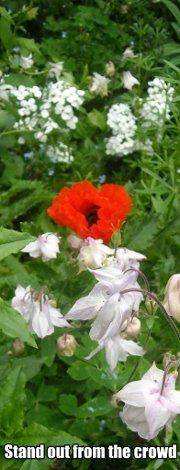
Can you identify this small white flower?

mystery flowersI am working in the village at the moment. A good job working outside in the sunshine for and old friend.

I don’t even need to drive to work so Jalopy snoozes in the drive.  Sometimes I cross the road to retrieve a tool from her capacious boot or make a fresh cup of tea to take back to the job. For a few weeks I’ll enjoy the sort of life that I might have led a hundred years ago. Quiet and sedentary.

I can hear the gentle buff of the cottage door opening and see the place as others must. I can observe Danny, identify the familiar rumble of his engine as he turns left to John’s shop or right to Newmarket.

Returning on foot I notice different things. The flowers hidden beside the gate. The butterflies. And today these flowers. If I hadn’t come back mid morning I would have missed them. John was in strimming mode.

This is always a bit of a tinder box each spring. John wants things to look neat. I want the daffodils to die back. I knew that he was eager to tidy when he leant back in his chair, put down his mug and announced.
“I’ve got the strimmer in the boot. I could clear the front. You know there’s a long bank of Daffodils on the turn into Mildenhall. They are cut down straight after flowers each year and it doesn’t affect them flowering the next year.”
He gave me a strong look and added.
“They make a lovely show.”

We agreed that if he had time he could tackle the front. Avoiding the daffodils.
I returned home mid morning to find John examining Jalopy’s voluminous interior.
“I need the extension lead!”
He pointed to the giant roll of cable lolling on the back seat. Jalopy was locked.

As John passed Danny the plug through the sitting room window I noticed these beautiful flowers. I have never spotted them before. John started working in the garden much later this spring. Perhaps they have always been there and strimmed before they had the chance to flower.

Even though John was poised on the starting blocks, strimmer in hand, the race was delayed as I picked this bunch. In the sunshine they were open wide like tiny white stars.

Has anyone out there any idea what this flower is called?

Print This Post

Cooking for your chickens: supplementing your layers pellets

Carol sampling mashWhy not supplement your chicken feed with homemade mash?

The cost of chicken feed is rocketing. It has already gone up 30% on last year’s feed prices. With a small flock of just five hens and the guinea fowl couple, the impact isn’t huge but any saving could be put towards maintenance and equipment costs. These can be big for people who have just started with chickens. And if you find a market for your eggs and want to expand, the investment in extra chicken housing and runs can be large. Unlike the UK human housing market, chicken houses are at a premium now. Suddenly everyone wants to keep chickens. I’ve heard of chicken houses swapping hands for £400 ($800 dollars).The market is booming.

I try and maintain our chicken houses and shelters well, so that they will have a decent innings. If I see chicken wire going cheap or thrown out – I snap it up. I always offer to buy redundant feed and water hoppers if I discover them in garages or sheds in houses that I visit. We were lucky to be able to buy a galvanised double grain bin a couple of years ago from someone who was leaving the village. This means that we can store food for the flock and the birds in a rat proof place. But there’s no point in stockpiling masses of feed as the sell by dates are not long on commercially made chicken food.

A few weeks ago I noticed that The Chicken Lady was softening kitchen vegetable scraps in a casserole dish for her chickens. I was curious.
“We simmer the peelings until they are soft and then add bran to bulk it out. The chickens love it and it makes a huge reduction in the feed bill.” Husband, S explained.

Up until now we have fed our flock of seven with fresh leftover greens, carrot peelings and chopped cauliflower stalks occasionally in the morning. Initially they were suspicious until Carol and the guinea fowl couple dived in. Now they all love the morning health bar. It’s snaffled in minutes. Layers pellets are on offer in the hopper 24/7. The latter might be nutritious but who would turn down the crunchy fresh veg?

I hadn’t thought of actually cooking for them. When I dug up a few too many Jerusalem artichokes, I tossed them in a pan with some potato peelings and water. When they were soft I stirred in some oatmeal and wheat germ. It looked like the nightmare meal from hell so I added some fresh greens to tempt them. Once Carol had given thw dish the thumbs up, the whole flock tucked in.

I worried that the flock would scorn the layers pellets with the vitamins and minerals if we supplemented the feed. The trick is to give them a smallish portion. Initially with a few fresh leaves to attract attention. Just enough for every bird to scoff and want a little more. Even chickens get bored and fractious.  Supplementing their diet has lifted our flock. Egg production has improved since we started feeding them the Chef’s Special for Discerning Chickens.
 
It took a while for us to retain ingredients and not automatically scrape them into the compost bin. Now the Chef’s Special is a regular pot that bubbles on the stove. We are saving money, they are eating a more varied diet.

If you have the time and determination you can also make all your own chicken feed. I’m sure that it’s like moving your flock from a life of cook in sauces to delicious meals made from scratch. I have found two excellent sites with wholesome recipes.

http://www.themodernhomestead.us/article/Making-Poultry-Feeds-1.html
http://logcabinhomestead.blogspot.com/2006/02/chicken-feed-recipe.html
If you try them I’d love to hear how they turn out for you and your flock.
 

Print This Post

Exceptional people: Brad Rising

pond with reflectionsEveryone occasionally meets an exceptional person. These do not have to be Nobel prize winners. Truly special people are scattered liberally across the globe. They are not necessarily those who raise thousands for charity every year. They can be women or men who lead a backwater life. You know if you meet one. You can’t stop thinking about them. They affect your life in a quiet way.

These are the people who influence deep changes in your life but they probably never realise their impact. Their lives reverb. They are not hungry for fame and don’t run courses or lecture or sell their secrets. It’s just that they have a found a good balance and are complete and rounded as a pebble that you pick up on the beach.

You take that pebble home because it looked right and felt good when you held it in your hand. With a pebble, it’s so easy to lose that pebble/sea sound moment. With people it’s different

Brad Rising was a man that I met briefly in my twenties and has had a deep influence on my life.

When I met him in Deya, Majorca in the late seventies I warmed to him. The next year I liked him even more. Then I visited the island with a boyfriend and didn’t look him up. I didn’t see him again.

Twenty five years later I often think of him. Particularly when life starts to get a bit too busy and frayed at the edges.

He was in his early sixties when I first met him. Slim, American, and possibly the gentlest man I have ever met. At that point and divided his time between America and Majorca. Six months in each.

I thought his life was weird at the time. Gradually, over the years I began to understand.

In America he would take a day job. He would rise an hour earlier than he needed to, just to have sometime when he could indulge himself, play his guitar and feel that he had a good quality of life. Then he would beaver away. Walking to work, eating his own sandwiches and saving everything that he could to fund his six months in Deya.

When he got to Deya he would eke out his funds and concentrate on his writing. He used minimum electricity and resources. I often remember seeing him pickup a large bowl of water from the lawn.
“This is my water for washing.” He explained. “I fill a large shallow bowl in the morning and put it in a sunny spot. By evening it’s warm enough for a shave and wash.”
I was astonished. Now I wish that I’d asked more about his life. I doubt that he had a fridge as his food was stored in a large, shallow basket that hung from the ceiling. It looked very pretty but was a practical way of keeping the food out of the reach of rats. And the food was simple – some fruit, cheese and bread.

I remember walking with him in the woods and stopping to visit a house built around an open central courtyard. This house belonged to farmers. Three generations lived there. Two little girls played hide and seek while a toothless granny shelled peas into a large bowl. In a side room an old man sat on a settle beside a roaring fire. Brad chatted to him in the local dialect. The fire lit the room.

Back then I though that frugal living was the life of baddies like Scrooge. Now I understand that Brad was practicing frugal living. His was with joy. It meant that he could live his dream for at least six months a year.

He was never stingy, just careful with his money. He was a very special man.

This afternoon I decided to find out what had happened to him. Had he been published?

I discovered that he had sold some of his writing and eventually lived permanently on the island that he loved. I also found out that he’d died a few years ago. It was l a shock to learn he was gone. People like Brad Rising should live forever.

In this small corner of England he’s alive.

Print This Post

Flowers from the garden: May 2008

Rosa banksiae and cornflowersI used to leave this post until the end of each month, hoping that there will be more plants in flower. Then I would cram as many different flowers as I could find into a vase.  A large mixed bunch is a joy but sometimes a simple combination just works well.  When I saw my favourite rose coming into flower and the cornflowers beneath it, I just had to pick them both. A perfect summery pairing.

Our Rosa banksiae ‘Lutea’ has hovered on the verge of flowering since late January. May is the month when it is at its best and should burst into a wonderful wave of frothy flowers. If the spring is too warm she flutters about on the edge of flowering for weeks, and the final display is a hiccupy affair. This old rose is not a repeat flowerer. She just sings her aria once a year. So the cold snaps last month were welcomed by me. She was held in check and has waited in the wings to make a dazzling appearance this week.

And what a song. The performance always moves me. The display is as lush and extravagant as the flower heads are soft and tender. They cry out to be touched and smelt. The scent is the gentlest waft of violets for those with an acute sense of smell.

This rose is a must for any gardener who loves a dramatic annual visit from an old friend and has a long sunny wall. And there’s the rub. Left to its own devices this rose can scramble for thirty feet or more. The largest noted version of this rose was planted in Tombstone, Arizona. The trunk has a circumference of 12 feet and the spread of the rose covers 8.000 square feet. Ours is trimmed after flowering and again in late July. It flowers more profusely if cut back. As the flowers grow on new wood, don’t trim it after July.

Ours has not taken over. After fifteen years the circumference of the trunk is a mere four inches. It circles the south west facing sitting room window and has scrambled into the winter flowering honeysuckle, forming a natural mini porch roof over our front door. The guys in Tombstone must have let it rip for untold years.

Perennial Cornflowers (Centaurea montana) are gradually self seeding at the front of the cottage. They can tolerate drought and hate to be waterlogged. I love the combination of yellow and blue flowers. As Danny said this evening,
“Blue skies and cornfields.”

Let’s hope that we have plenty of both this year.

Print This Post

The slow cooker chef: comes to the rescue. Tasty, easy, low fat leek and potato soup recipe (vichyssoise)

white tulipsWhen I pointed out that soup was on offer at Waitrose my mother’s reaction was instant.
“Who’d want to eat soup at this time of year?”

Well, Danny and me for starters.

We’ve stopped eating soup for lunch for the past month or so and now the weighing scales are in danger of collapsing when we step on board.  Soup is so easy to make – why does it seem such a palaver?

I’ve been working much nearer home so lunch boxes are no longer planned. I swoop home grab some Boston Baked beans, a chunk of polenta bake or toast with pesto and cheddar cheese.

This week a glimpse of my widening girth had me thinking about ways to make soup even easier, with a better flavour, and I came up with this method.

Slow oven baked winter root vegetable soup is packed with taste and zing. The flavours are enhanced by the slow cooking. Chilling soup inhibits the flavours. Why couldn’t cold summer soup be cooked slowly? Unless you have an Aga, this is an expensive way of producing a tasty soup.

If you have invested in a slow cooker/crock pot you have the means to simmer your soup for hours just using the power of a 100 watt light bulb (when the cooker is on the low setting). Also you can throw all the ingredients into the slow cooker without having to sweat the onions in oil and butter, so the soup can be low fat too.

With these wonderful warm sunny days I’ve yearned for Smart Wife’s Leek and Potato soup (Vichyssoise). Perhaps if I made it in the slow cooker the flavour might be enhanced and even better.

I used the ingredients from the recipe and simmered the vegetables for three hours in total, starting on high until the soup had started to simmer and then switching to the low setting.

Danny tasted the soup. The flavours were so deep and intense that there was need to add salt, pepper or even lemon juice. We had produced a tasty healthy heart soup!

I did add single cream (about 150ml to the 2.4 litres of soup) to turn it into traditional vichyssoise. The large bowl of soup is now cooling in the fridge. The perfect chilled soup for a hot summer’s day. Pretty good without cream and wonderful if you feel like including a splosh to give it that authentic flavour. The slow cooked version is light years beyond the traditional recipe.

The two vital things to remember are to use:

  1. Really good stock (prepared overnight in the slow cooker using fresh bones, some vegetable divas and herbs).
  2. Chop your vegetables fine (in the stock and the soup). This releases more flavour.

Slow cooked leek and potato soup recipe (vichyssoise)

Ingredients:

  • 200g of finely sliced onions
  • 500g of prepared leeks (tops discarded, washed and sliced fine)
  • 300g of potatoes (peeled and sliced)
  • 2 litre of hot stock (I used lamb and pork stock and skimmed off the fat)
  • 150ml of Single cream (optional)

Method:

  1. Prepare the leeks, discarding the darker green tops and rooty bases. Split the leeks and wash all earth away. Slice the leeks fine.
  2. Skin and slice the onions fine.
  3. Peel and slice the potatoes fine. I use King Edwards or Maris Piper pots
  4. Add the leeks, onions and potatoes to the slow cooker and top up with 2 litres of boiling meat based stock. Ideally fresh but 3 chicken stock cubes would do at a pinch.
  5. Switch the slow cooker to high and stir. Pop on the lid and leave until you see that the vegetables are simmering (about twenty minutes). Switch to low and stir. Leave for a good two and a half hours.
  6. Check the onion. If it is soft the soup is cooked. If is is till firm leave for another half hour until the onion softens.
  7. When all vegetables are soft, blend with a stick blender and chill. Add cream if you want the traditional vichyssoise taste.
  8. Season with salt/lemon juice/freshly ground white pepper if necessary. Garnish with parsley to serve.
     
Print This Post

Tea

tea caddyFriday night. I’ve been working outside all week with no radio. That’s fine as I tune into the pattern of sounds in our village. The girl that tacks out on a coloured horse every afternoon. The heavy breathed joggers. The trail of mothers and children that venture to school and back at tea time.  And the intermittent traffic, usually driving far too fast.

Our cottage is set back from the road in a dip. It’s a secret place. On a tight bend, people just don’t notice our home. We have double glazing and a deep drive. We could be on the moon

I am working at a house opposite. This wonderful house is set a good ten feet higher in an acre of garden. Inside it is quiet and the heavy doors shut with just the right whisper. Phut. But this afternoon, working outside, I was almost knocked off my ladder by the orchestra of lawnmowers. From Anne Mary’s sit-on steed to the mini Flymo in the garden next door.

I didn’t hear the call for tea but my decorating training means that I can lip read. As long as it’s a simple word. Tea has a 100% response rate.

Tea is my fuel.

I tend to shy away from a tea break. I generally opt for a mug on the job. Tea should be savoured and ideally be constantly at hand.

I used to be a “Twinings 1720” freak but now I have discovered Assam. Perhaps it just works well with our water but when I twigged that I had only 4 bags left I began to get a bit twitchy.

On a job I’m generally offered two types of tea.
“Builder’s or Earl Grey?”
I generally opt for the former. I’ve consequently carried out a blind tasting of most of the supermarket blends on the market. I quickly came to the conclusion that Twining’s Assam is a race apart.

Beware. If you try this tea there probably will be no looking back and what will you do with the surplus of insignificant tea bags?

Print This Post

Watching chickens

ginger hen“If I have to return I’d like to come back as one of Fiona’s chickens.”

I overheard this at a summer party when I was topping up people’s wine. I was delighted. The chickens were relatively new back then. The run was filled with a good two inches of gravel, the immaculate accommodation comprised of a pretty hen house and the Ken Doherty day centre.

Our flock of seven live an enclosure (30 x 6 feet). A gated community. Until we stop keeping Min Pins, this is the status quo chicken wise. If I came back as a chicken I’d prefer to be free range. On a bad day I fret about our chickens and their freedom, which is silly as I know that they are happy chucks.

I spent a few days last week gardening in the vicinity of our chicken run. They are companionable creatures. Yes, there is a bit of gentle bullying but not enough to intervene dramatically. It’s acknowledged and acted upon by throwing some treats into the hens in the cheaper seats. You can’t take out an ASBO against a dominant chicken, although if the problem is causing distress it’s good to have enough space to isolate a chicken. Luckily we have enough space in the run for a hen pecked chicken to escape and lie in the sun.

Getting to the stage where each member of the flock is happy, from the top to the bottom of the pecking order, feels good to me. We are gliding there right now. So many additional factors can throw this happy mean out of kilter at the drop of a feed scoop. Changeable weather, a hen going broody or the drama of introducing new fowl.

In just over a week’s time we will have a clutch of teeny ducklings hatching in a luxuriant nest within the Emerald Castle. This will affect the equilibrium of the flock. Whilst Mrs Boss tussles with the complexities of raising her brood the rest of our flock will be bystanders outside the event, for a few weeks. Unlike the hordes that couldn’t get a ticket for Glastonbury, our birds will be able to watch the ducklings through the wire. And they will do. They might not have all the soduko playing genes that make us tick but they have fun and react to anything that is going on…

I know which ones will be in the front row for the Emerald Castle floor show. Cloud and Thunder. They always closely watch any Emerald Castle activity. After all, it was where they hatched last year. Sometimes I have seen them gently check the door into the castle grounds. They move their beaks within the gap between the door and the frame. They give up eventually but if they spot Mrs Boss taking the air in the castle grounds they flutter down, intrigued as she scratches for treats.

Keeping a few chickens is good for your health. When I step out over the back doorstep and head down the garden, I am buoyant. As I open the feed bin, I can hear Carol’s heavy chicken steps as she charges up the run. When I pass the end of the rose border I am greeted by the motley crew. They are totally distracted by a large handful of wild bird seed.

I can change their water, top up their food and collect their eggs before they even look up to survey the Min Pin audience watching them.

Print This Post

The Salami Project: part four. A journey into the heart of the Fens

meat safeThe temperature in the larder is rising with these warmer days. It is a proper old fashioned cold room but the fridge freezer lives in there and the large motor inadvertently heats the room. Great in mid winter as things don’t freeze but in summer it’s not cool enough for maturing my fast growing family of salami.

After the initial excitement of one salami actually tasting good, I have started experimenting in earnest. One of the ways of cutting down our weekly spend was to avoid buying speciality salami.

I have yearned for it so much that I tended to avoid the salami section of shops. Now I am haunting them, studying the ingredients, the look of them and dreaming of producing my own Cottage Smallholder recipes.

I did consider moving the fridge freezer into the kitchen. Danny was alarmed. It is quite large. And it would mean working beside an edifice that purrs and glugs constantly. The kitchen table is my writing space as the Rat Room is now Danny’s lair.

We are lucky to have a small lean-to barn that is propped against the north wall of the cottage. The temperature in the barn is always cool. Never exceeding 55 degrees, even on the hottest summer day. It is where our fruit wine ferments slowly after the initial airing cupboard frenzy. Fruit liqueurs are stored on its cool shelves and another hundred tossed-in things litter the floor. It’s a place for nimble sober feet.

I spotted two old meat safes on Ebay and won them for much less than it would cost me to make them. And where would I find perforated zinc if I wanted to?

I borrowed D’s car and drove for miles across the fens to collect them. Eventually I found the isolated farmhouse and received an old fashioned  English welcome. Lots of chat, a large mug of tea and the luxury of swapping notes.

It turned out that we were all self employed. This couple were entrepreneurial. gardeners and eBay masters. We were intrigued by each other’s lives.

Eventually I had to head home and we attempted to stow the two meat safes in the car. The big one wouldn’t fit. We did manage to squeeze it into the car but it would have meant no gear changes and a long journey in third gear was out of the question.

We tried everything. We even emptied the boot, which was full of our stuff to be recycled. I drove home with the slim meat safe and a car that was considerably lighter.

This svelte meat safe can protect eight salami from heat, flies and rats. It is now sitting in our barn, holding six hanging salami.

Hank over at Hunter Angler Gardener Cook has advised me well. He suggested buying a second hand salami fridge and a regulator (to keep the temperature a constant 55 degrees). In a few months time, the savings on our outgoings will enable me to do this.

Until then, the meat safes will have to suffice. I must admit that I panicked when Hank told me that temperatures over 60 degrees could spoil a juvenile salami. But all is now well. In an old frontier salami sort of way. Exotic, seat of the pants stuff. And the meat safeis a well made, beautiful object. I can’t wait to collect the big one. I can store masses of salami, game in the winter and at Christmas it will be a fridge. Old fashioned but the perfect place for stilton, goose and mince pies.

Someone asked me today if I had any hobbies apart from the garden. The response was instant.
“Making salami, bacon and pork pies.”

I’m having fun with this

Print This Post

Species tulips

Little Beauty Species TulipIt was at Carol’s house that I first noticed a Species tulip. At midday the small flower had opened like a star. The leaves indicated that it was a tulip but this was a tulip with a difference. At the end of the day when the sun was going down and I was heading for Jalopy, I took a small diversion to look at it again. The petals had closed. I crept away.

I like flowers that change during the day. They seem even more alive.

That autumn I bought two packs of Species tulips and planted them in two low stone pots. The squirrel was clearly delighted. Out of the packet’s promise of twenty flowers, we found four.  Lying horizontally in the spring and a lot of scuffed and messy pots all winter. Since then small groups of these exquisite bulbs have popped up in small groups in the herbaceous border. The squirrel clearly owns a large chain of larders.

Last November I planted some species tulips under some violas in a massive pot that sits just outside the back door. Inca has a hunger for violas and pansies but these are out of reach and have thrived.

The squirrel has rifled the stone pots but has missed this display, aptly named Little Beauty.

Species tulips will naturalise into drifts, given the right conditions. A sunny location and well drained soil.

Print This Post

Overhauling the soft fruit border

water lily in newt pondBeside the chicken run is a stretch of border. Roughly fifteen feet long and six feet deep. The newt pond lies on the outer edges of the left hand side and is six feet in diameter. Last week I slipped on the edge and fell in. I damaged my left hand, especially the thumb, and one welly filled with water. As I am strapped for time at the moment, I just emptied the welly and carried on working.

Throughout the afternoon and early evening I wondered whether the little red worms that I’ve seen in the pond were sashaying up my left leg. I also considered the possibility of leeches in the UK. The lining of a Wellington boot looks very thin. The squelching indicated that it‘s highly absorbent.

I was overhauling our soft fruit border. Each year I plan to dig it over and net it. I am always seduced by the main herbaceous border – planting new stuff and tending old friends. This year the saving 25% challenge dictates that I tend and harvest all our soft fruit. No sharing with the squirrels, birds and Dr Quito who is a passionate strawberry guzzler. The raspberries are already protected in their own cage. Last week it was the turn of the other soft fruit. No tempting packs of red currants for our grog will lie in a trolley pushed by me. They’ll be harvested from this sunny stretch this summer.

Every berry that we grow has to have the chance to swell and take its place in the cast of millions. Planning their future distracted me from the hard, heavy task. Like an efficient casting agent, I plotted their parts in the Cottage Smallholder 2008 epic with care. Some will star in redcurrant jelly, others in dessert gooseberry gin. A few will participate in strawberry tarts and entertain us in vodka over winter. If we have goose at Christmas it will be accompanied by lashings of homemade gooseberry sauce. White currant and elderflower jellies would be a refreshing finale to a summer supper beside the pond. As my imagination raced my fork dug deep between the bushes.

The problem was that the bindweed had got a grip in this sleepy corner of the garden. I discovered that ours seem to have been on a basket weaving course. The patch was dug and sifted four times, which was difficult with my invalided thumb. Claw hand was deployed. The small garden incinerator performed with the poise I’d expect from an old trooper. I combined the bindweed with dry, combustible weeds and lit it late. Overnight it did its job in a gentle crackling, smoky sort of way. We have another four nights of burning ahead.

It satisfies the pyrotechnic in me. An intriguing diversion from digging. After  three days, my thumb can now grip and I am racing ahead.

Our soft fruit patch now hosts a Tayberry and a small Japanese red fruited climber. These will twist through the roses on the red brick wash house walls. Beneath are gooseberries, red and white currants, an army of strawberry plants that I have transplanted from various parts of the garden. The latter looked a bit wilted this morning but a good soak revived them and they had perked up by dusk.

There are also a lot of frogs in the pond. Rousted from their resting places with a wave of a fork. I have scattered fertiliser and used our richest compost, from the superior bin, as a mulch around each bush.

Neglect has its rewards. I discovered that we have three self seeded baby bushes. Two gooseberries and a white currant.

The poles and the netting are waiting in the wings. I’ll wake early one morning this week, creep downstairs and construct the cage. Fuelled by a large mug of tea and enormous hope.

Next Page »