Elderflower recipes from Cottage Smallholder
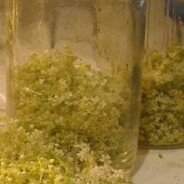
I’m going to be busy making elderflower champagne this weekend. I’m a virgin elderflower champagne maker so I’m excited by the prospect. We used to have an enormous elderflower tree to the south side of the cottage. Unfortunately it died a couple of winters ago but luckily for us, this giant tree left prodgeny. So we have enough blooms to make our elderflower and elderflower and lemon cordials. The latter is much more of an adult drink and gets the thumbs up from anyone who samples it. As elderflower champagne is a new venture...
read moreHow to harvest and store walnuts and cobnuts
“I’m going down to collect some walnuts. Apparently there are masses under the trees.” “Is it OK to pick them up from the ground?” “Yes. I used to collect them on the big estate when I was working there. They used to call me down from my ladder to gather them so that they could mow. The shells mucked up the mower.” We were sitting at the top of our allotment. On two ancient chairs that we inherited with the plot. We spend quite a bit of time perched on these. Looking down the hill and on to the flat area on the other side of the...
read moreTasty spring frittata with new potatoes, rocambole, cheese and parsley recipe

Well I finally cracked it. My meat loving partner announced with delight. “That was the best frittata that I’ve ever eaten. I’d be happy to eat it twice a week.” “Did you realise that it was entirely vegetarian?” “No. It was just sublime.” Thoughtful pause. “I don’t care about the meat and still would guzzle this twice a week.” A result! I’m trying to cut down on our meat intake. Healthier and cheaper meals. Delicious is a bonus. The magic ingredient was rocambole . I had never used this before but after I...
read moreWild garlic: Ramsons (Allium ursinum)

Back in the last century, when I was at boarding school, the music and science block was a short five minute walk from our classroom. This is also where I was taught to play the violin by The Missing Link but that’s another story. In Spring there were frothy cushions of wild garlic either side of the road. No one was keen on singing lessons so one day we thought that we’d spice things up a bit and eat some wild garlic. “Then we’ll open our mouths as wide as possible as we sing.” “Yes lets! She can’t complain as for once...
read moreHow to cook puffballs recipe

“I want Mrs Boss to have a memorial. She deserves it.” Danny was warming his hands over the wood burning stove. He had just finished burying her in the garden. It was March 2009. “They have some nice Willowstone chickens at the garden centre. I’ll get one. I know that they are well under £20.” But when I visited the garden centre there were no chickens on display. In fact it has taken me all this time to discover that the stone garden ornaments had been moved to a different area. Last week I chose the chicken that looked most...
read moreHedgerow by John Wright – River Cottage Handbook No.7: review

I recently received a copy of Hedgerow (River Cottage Handbook) by John Wright and I’m delighted with it. I’m a big fan of Richard Mabey’s Food For Free – I have the gem edition which can be carried easily in a pocket. Hedgerow would need a chunkier pocket but it will accompany me on foraging trips as it has photographs -making identification far easier than drawings. This is the book that I’ve been impatiently waiting for and now it’s finally in my hands. The book is called Hedgerow but actually covers plants, flowers...
read moreHomemade pine needle vinegar

It was Danny’s turn to buy the Balsamic vinegar last weekend. Someone had put an expensive bottle of Balsamic beside the cheap ones in Tesco and he ended up paying five times more than he could have. The resulting shriek got me thinking about Balsamic vinegar in general. The price and quality of Balsamic vinegar can vary enormously. We have a very expensive bottle that we use occasionally for dipping or salads and generally have a ‘cheap’ bottle that we use for cooking. But cheap Balsamic vinegar is still much more expensive than...
read moreReview: Marcus Harrison’s Wild Food Mentor course

One of the things that I’ve always longed for is to spend time with someone who can teach me about foraging in depth. There are courses but rarely local to me. Also some of the best ones can be ridiculously expensive once you add the price of the petrol and staying overnight. I have several foraging books and these have proved to be very useful – especially the small edition of Richard Maybe’s Food for Free which can be slipped into a pocket or Jalopy’s glove compartment. But I knew that I wasn’t even beginning to take full...
read more




On This Day
-
2012
-
2011
-
2010
-
2009
-
2008
-
 2007
2007
 FD
FD