Print this article Print this article

How do I keep my chickens clean?

Mrs Squeaky CleanChickens are not naturally clean creatures, unlike the story book ones. Do you remember them? Clean living hens, wearing spotted scarves and venturing out to the market with a basket hooked over a wing and a clutch of chicks close by.

Real life chickens will foul their chicken house and quite often foul the nesting box. The only chicken that I have known to actively ‘clean’ her house was Mrs Boss. When the guinea fowl keets hatched she pulled all the hay from her nest out of their house in the ark. The more clean hay and woodchips I added the more she pushed them into their run. After a couple of weeks, I admitted defeat. The keets slept under Mrs Boss’ wings, on bare boards. I could never understand why she did this.

If chickens are not cleaned out regularly their droppings can harbour and spread disease. Droppings in the nesting box can foul the eggs. Remove any droppings immediately from the nesting box when you see them.

There is also the question of chicken mites. In warmer weather, mites can breed like wildfire in a house that is not treated regularly. They lay their eggs in dark nooks and crannies in the house and are at their most active at night. They bite the chickens and these bites can become infected.

An imaginative Estate Agent might describe our hen house as,
“A Canadian style two storey lodge. Lower floor family room with traditional wooden slatted staircase leading to spacious communal bedroom for 8 plus with half mansard ceiling and door to cosy penthouse nesting box.”

It gets a good cleanout once a week. And a top to toe super valet and repair in the Spring and Autumn.

If you are canny, the weekly cleanout for an average sized house (ours is designed to accommodate 6-8 Maran hens) takes about twenty minutes, often it is completed in ten.

The trick to quick and easy cleaning is to store everything that you might need within a few feet of the chicken house. We keep our chicken consumables in two large barrels in the run. One holds the bedding the other contains sprays, powders, oyster shells, grit and everything that a chicken keeper might need. These storage bins are also popular with the flock as they have another vantage point on which to stand and observe the world.

Our chicken feed is stored in the boot of Danny’s car and in a large aluminium grain store in the garden. Along with the wild bird and Min Pin food.

Generally I pull on my chicken cleaning gloves at midday when the flock are out an about in the run. Initially I spray the inside of the house with a decent anti mite spray. I close the door to the house as I am not sure how safe the spray is for the flock (although it is marked suitable for an aviary with residents). While the spray wafts through the house I collect all the stuff that I need from the barrels. woodchips, fresh hay and mite powder.

The old woodchips, hay and droppings are swept into the chicken run dustpan and go into their bucket (this was sold to me as a nappy bucket and has a lid). This lid is handy as the bucket can sit happily inside the run until it is full.

Once all debris has been removed, I spread wood chips on the floor of the house. These are great as they absorb moisture and make the chicken cleaning process much easier. They are available in enormous chunky packs. and a pack lasts for months. I lay a layer of woodchips in the nesting box topped with a thickish layer of hay. My mum recommended hay for the nests as mites can breed easily in the hollow strands of straw. The hens fashion the hay into nests very quickly, even if they are off lay.

Once fresh chips and hay have been spread, I return to the barrels for oyster shells and grit. I used to put these in a nifty container in the run, now I cast them just before I open the gates to get out. The flock dives for these and before they have discovered that they are not deluxe grain mix I am the other side of the wire. Poultry need grit. Ours find this in the back wall of the run. If yours don’t have access to a wall don’t forget to provide them with grit, if you are feeding them seeds and corn as it essential for breaking down the husks in their gullets.

Chickens are fine on woodchips alone and I have seen many happy hen houses that just have newspaper spread on the floor. Once you find an effective way to keep your chickens clean that suits you, use it on a weekly basis. You and your chickens will bloom.

Related Posts with Thumbnails
Harrod horticultureI love gardening and I also love great tools, seeds and plants. My favourite online site is Harrod Horticultural because they stock really good quality items. Their service is top class. Give yourself or somebody you love a present that they will adore. Click here

Britain's Next Top Model

176 Comments so far

  1. CeliaNo Gravatar on November 9th, 2007

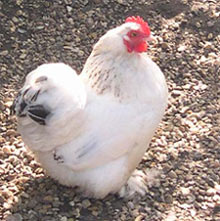
    Aaaah! Mrs Boss, Super Star, looking very bouffant – is she going to the Oscars?

    Sorry to be picky – but the mites in hen houses are Red Mites – not to be confused with Red Spider Mites which play havoc in greenhouses and do no harm to chickens.

    Otherwise excellent advice, especially at the start of the winter months when the hens will be spending long hours inside – resulting in lots more poo to be cleaned out!!!! I have to admit to having a much slicker hen-house cleaning regime than one for doing the house work!

  2. fnNo Gravatar on November 9th, 2007

    Hi Celia,

    Oops! Post updated! I always get in a muddle with these.

  3. anne wallerNo Gravatar on November 9th, 2007

    hi,
    i totally agree with regular cleaning out of hen houses. during the winter i do mine every 3/4 days – i have a large house with more chix than is good for me…….
    i was interested to read that you use hay for the nesting boxes coz all of the ‘chicken bibles’ that i own seem to specify that you should use straw. i like the reasoning behind hay usage and can see the logic but am i not right in believing that hay is more expensive to buy than straw?
    i have a ‘free’ supply of straw as well as the gleanings from the farm after baling has finished, so it would take a lot to disuade me from using it.

    the beauty of regular cleaning out is that you can get the job done quickly and can catch the first signs of mite – or rodent – trouble. anyway, would you want to sit in your own poo on a cold, dark day? no….. thought not……………

  4. JaneNo Gravatar on November 9th, 2007

    Interesting to hear about Mrs Boss. Our broody chicken did exactly the same when her seven strong brood arrived- no matter how much bedding we put in for their comfort , she just shoved it out everytime! The idea about newspaper sounds good – less sweeping out of straw involved. This year as novice chicken keepers we had red mite- truly disgusting! We kept them in an old stable which was almost impossible to keep clean. I do not want to repeat the experience of running down our garden with my hair full of mites, shedding most of my clothes outside the back door and running head long into the shower! A bit like having children – no one warns you about these things! I would now definitely recommend a smaller chicken house which is easily swept. We now spray every week.
    While I am on – how old does a chicken need to be before you can tell if it is male or female?

  5. fnNo Gravatar on November 9th, 2007

    Hi Anne,

    If you have been infected by chicken mites (as I have been and Jane below, you would toss away anything that could harbour them!
    A bag of pet shop hay is chap and lasts for weeks. If straw works for you, stick with that. If you get mites it would be a good idea to change your bedding!

    Hi Jane,

    I was infested, just before a smart supper party. We arrived very late! No one told me about the mites!

    I am afraid that I can’t answer your last question. I have no idea how many weeks that you have to wait before you can differentiate between male and female fowl. Apologies.


  6. PatNo Gravatar on November 10th, 2007

    Thanks for that Fiona!!! Now if I ever get any chickens I will know how to take care of them.

  7. anne wallerNo Gravatar on November 10th, 2007

    believe me, i have had red mite problems in past years and can identify with the ‘running down the garden shedding clothes’ scenario. last winter, following that hot and ‘mitey’ summer, i decided that drastic action was called for. i am licky enough to have 4 chicken houses (all various sizes and not all in use at the same time) so i ‘rationalised’ the girls into 1 house for 48 hours and creosoted the other 3 – absolutely soaking them inside and out. the sight of all those mites making a run for it makes me itch even now. after 48 hours i moved the girls into the largest house and creosoted house number 4. it may be that i’ve just had a lucky year – but i have had no mite this year, not a sign! i am not so daft as to think i can rest on my laurels though. i have a new supply of creosote and will be re-doing the houses this winter.
    throughout the summer i use ‘Raid’ fly spray on the ends of the perches, i have found that this is the best place to discover if a mite problem is in the house. i also smear vaseline around the end of the perches, the mite get stuck in the goo on their way to the birds. again, while it won’t kill all the mite, it does give you an indication that the mite are present.

  8. fnNo Gravatar on November 11th, 2007

    Hi Pat,

    I know that you’d love keeping chickens. Perhaps you will, one day.

    Hi Anne,

    Your creosote idea sounds like a great answer to the mite problem.

    Yes, either end of the perch is a good place to see whether you have an infestation of mites. I lift up the perch and spray into the housings. I’ll try the Vaseline – great tip.

  9. farmingfriendsNo Gravatar on November 11th, 2007

    What an excellent article. Lots of great tips and a good reminder to regularly clean out the hen house. Thanks for the reminder. sara from farmingfriends

  10. fnNo Gravatar on November 12th, 2007

    Hi Sara,

    Thanks for dropping by and leaving a comment.

    Cleaning the hen house is the only sort of cleaning that I really enjoy. I suppose it’s because it is completed in such a short time!

  11. anne wallerNo Gravatar on November 16th, 2007

    i know that this is not strictly about keeping chix clean but it is re: husbandry in general.
    does anyone have any tips about how to stop the metal drinkers from freezing in this cold weather?
    having just spent half an hour with a can of boiling water trying to de-frost 3 drinkers i could do with some tips that are tried and tested. the glycerin that i put into the water last night has frozen along with the water. maybe i need to put more in – but it is not cheap and i could only buy it in small bottles.
    all advice gratefully received.
    thanx

  12. fnNo Gravatar on November 17th, 2007

    Hi Anne,

    The first winter that I had chickens I battled with freezing water in the drinking fountains.

    I discovered that a fountain kept inside the chicken house was less likely to freeze.

    Now I bring a fountain in to the kitchen overnight and swap it with the one in the run in the morning. Also I switch to large plastic drinking fountains in the winter as they are much easier to deal with if the water has frozen inside them.

  13. anne wallerNo Gravatar on November 17th, 2007

    thanx for the advice. having had my fingers stick to the metal again this morning i am going to get a plastic drinker asap!! my fingers are still recovering……………… the chickens heard some choice language today…… not nice for such well bred girls…..

  14. fnNo Gravatar on November 18th, 2007

    Hi Anne,

    I am switching over to the plastic drinkers as well. Sometimes the water freezes during the day in very cold weather. It takes longer for this to happen with our giant plastic water fountain.

  15. DeAnne DingwallNo Gravatar on November 21st, 2007

    Diatomaceous earth solves all mite problems. It is fine, fine, fine particles of silica from ancient ocean sand.Sprinkle on roost ends and wherever mites can hide. Harmless to chicks but cuts the bugs up both externally and internally. I also successfully used it to rid my fishing worm beds of mites. No harm to worms either.
    The torch sounds a bit radical!

  16. fnNo Gravatar on November 21st, 2007

    Hi DeAnne,

    Thanks for the tip. There is an interesting link here – re the possible dangers of using silica.

  17. RichardNo Gravatar on January 23rd, 2008

    Hi
    I was wondering if anyone had the answer to my problem – How can I stop the chickens from sleeping in the nest boxes in the chicken house.
    They do have 2 perches to use but prefer the nest boxes – and then fill them up with poo!

  18. fnNo Gravatar on January 24th, 2008

    Hi Richard

    If I knew the answer to your question I’d be doing handstands in the garden, or at least attempting them…

    We have the same problem. I suspect the reason is that some hens, like us, need a bit more privacy.

    I put loads of hay in the nesting box so it’s easy to hoick out the poo in the morning and not let it fowl the eggs.

  19. shannonNo Gravatar on February 23rd, 2008

    I have 4 or 5 chickens that like to sleep in the nest boxes it makes me crazy, so I have been sneaking in at night and lifting the chickens onto their perch, in hope of training them to say out of the boxes at night. So far no sucess!

  20. anjaNo Gravatar on May 10th, 2008

    Hello all,
    I just came across this forum and I wonder if someone has an advice for me. We have 2 hens with 9 chicks, two days old. Now I found that we have a huge mite problem. What can I do without harming the chicks?
    Thanks!

  21. fnNo Gravatar on May 14th, 2008

    Hi Anja

    Sorry for the belated response.

    We use mite powder and also spray the chicken house with an insecticide that is used in aviaries (I always make sure that the flock are out in the run when I spray).

    Your local pet shop would probably be able to advise you on the best way to proceed. I haven’t had the problem of mites on chicks but would use mite powder if there was an infestation.

    It would be interesting to hear how you get on. Good luck!

  22. ravenNo Gravatar on July 21st, 2008

    Hello. We’re about to get some hens and are wondering why it’s ok to put woodchip down but not bark chips? Any ideas? Thanks

  23. fnNo Gravatar on July 21st, 2008

    Hello Raven

    Woodchips are perfect in the hen house. Particularly under the perch and in the nesting box.

    We use gravel in the run.

    I’ve seen bark chips in a duck run but have no experience using them so can’t advise.

    Gravel is good as it can be hosed down and the chickens like to scratch about in it.

  24. EmilyNo Gravatar on July 22nd, 2008

    Hi all,

    Can anyone clarify if chickens can be bedded down on hay or not? Apparently they are more likely to get mites from hay than straw – is this true?

    x

  25. fnNo Gravatar on July 26th, 2008

    Hi Emily

    I use hay in the nesting box and woodchips in the hen house. Somepeople use straw in the nesting boxes but mites are more likely to breed in the hollow stems.

    I change the hay once a week and dust it with mite powder.

  26. PaulaNo Gravatar on August 3rd, 2008

    Thanks everyone, this is my first experience of mites I am still itching even though I have showered – have sprayed the hen houses but can’t catch the darn hens to spray them so will sneak up on them when they are roosting tonight hope it works!!!!

  27. SandieNo Gravatar on August 3rd, 2008

    YUCK! Itch, itch, itch! Those blighters move across your skin like wildfire!! We have just discovered an ‘infestation’ too! Poor chickies have been ‘camping out’ and we couldn’t work out why! I will try cresote and have ‘dusted’ the hen house and the girls liberally with lice powder… I have never seen (or felt) anything so disgusting!!!!!!

  28. Ann DonatiNo Gravatar on August 18th, 2008

    I have just discovered these horrible things on Saturday! I moved the eggs as I thought that one of my girls was going broody and next time I looked they were crawling all over the eggs. Yuk. Reminds me of those horrid “nits”. I have only just bought some of the powder so will try to do it tonite! Yuk!

  29. fnNo Gravatar on August 19th, 2008

    Hi Paula

    I find that a combination of an aviary spray and the powder sprinkled onto the nests in the nesting box work well for me and my hens.

    I had a similar shower to you, four years ago. Hopefully never again!

    Hi Sandie

    I do hope that you have got rid of them.

    I treat for mites all the year round, even though this is probably a hopeless waste of time in the winter! This does mean that I stay on top of the problem 24/7/365.

    Hi Ann

    It’s awful when you first discover them. However clean that the hen house, they will try and make an appearance every year. Treat for lice regularly and they will not longer be a problem to you or your flock.

  30. nigelNo Gravatar on September 4th, 2008

    can anyone recommend how you keep the run from not stinking? I only have 2 hens but thinking of getting a couple more so don’t want to upset the neighbours with it being to smelly.

  31. RhonaNo Gravatar on September 7th, 2008

    I have 5 lady hens just founded out they too have mites we have sprayed house and run with jeyes but when i go in the little things are all over you, can any one tell me do they live on us,you shower well but some still cling on

  32. fnNo Gravatar on September 8th, 2008

    Hi Nigel

    If you put gravel in the run, it helps. Also clean out the hen house once a week.

    Hi Rhona

    This happened to me. Shower and wash your hair and the clothes that you were wearing. That should get rid of them.

  33. SusieNo Gravatar on September 11th, 2008

    HELP !!!!! I been looking after some chcikens for my mum this week while she on holiday and one of em looked so sick so i brought inside and put her on my lap and wrapped her up warm, she seems to be ok noiw but when i put her on the floor there where little insects all over me i stupidly rubbed them off now they are everywhere on the carpet, the sofa my clothes ME !!!! I got a dog are these gonna effect my dog, what do i do to get rid of them they wont leave, i got chnaged i showered i hoovered ?

  34. fnNo Gravatar on September 11th, 2008

    Hi Susie

    The chickens have got mites and need to be treated with mite powder. Ring your petshop – they will know where to get some if they don’t stock it yourself.

    A good flea spray should kill the mites in your house. Spray the hen house well with a decent aviary spray – particular;ly under the perch and in all dark corners. Then clean it out throughly.

    Infestations of mites can make chickens feel very off colour.

  35. marcNo Gravatar on October 9th, 2008

    hi all

    i have really liked all the advice as i am new to keeping chickens. i have 6 differnet hens and i have had them about 6 weeks now. for the past 5 weeks i have had 2-3 eggs everyday but for the past week i have had nothing. should i start looking for any signs they are under the weather or is it quite natural?

  36. fnNo Gravatar on October 10th, 2008

    Hi Marc

    As the days get shorter and colder they will go off lay. Roll on December 21st and the shortest day! You should start getting eggs in January.

  37. Ann n MickNo Gravatar on October 16th, 2008

    What a helpful and brilliantly informative website!… we have adopted 10 ex battery hens and have adapted an old but large shed for them, its been 2 weeks and they are very happy, (we even sit in there with a cup of tea some evenings and watch them manouver for their favourite roosting place-sad us!) anyway, there are no mites present but I want to keep it that way, can you tell me what brings them in the first place? also, we wash the floor most days but there are lots of nooks n crannys hard to get to, should we fill them with shingle/stones?…thank you.

  38. LINDANo Gravatar on October 20th, 2008

    Hi all I wanted to write because over 5 yrs ago I was raising mallard. that was my 1st experience with yard birds. I got to learn some things like how to keep out varmants etc. I’m now raising chickens. mites are a problem. in my research I found that D.E. diamacea earth (food grade) is good to dust on to the chickens &on the dog for fleas& to mix with their feed took care of the fly problem in the chick pen.also suppose to help with mites. as far as bedding use hay instead of straw or use cedar. cedar is a natural bug deterent. it an be applied to the chickens with no harm & to the coope. for DE> food grade check ur farm or feed store or I have a web site. DE is also good health benefits 4u too. the cedar oil is also on the web th ere is bedding, spray 4 mites etc,& garden & coope. there is also 1 4 sealing wood like decks. the site I go to is cedar al just tell them LINDA recommended them as well as the site 4 DE. hope this info will b of use to U guys! oh u can also use 7 dust 4 the coope & dust the chicks but not feed it to them. where DE is good in & on as long as it is food grade not the DE from lows or home depot that is not food grade. don’t want to poison our girl now do we ! If any of U have any questions feel free to email me

  39. TraceyNo Gravatar on October 26th, 2008

    Hi there
    Just come across your website,really enjoyed reading the comments.
    We had red mite in June time and yes we also came running into the shower!!!!!!!!!!!!!!!!!!! horrible.
    We wanted a no chemical way to rid the mites and was told to use a blow torch (like the ones plumbers use ,we bought ours from Halfords £10ish)to burn all the mites from the nooks and crannys. They ceratinly come running out!
    Touch wood we seem to be on top of them now. we have dusted our chickens with powder as well.
    We keep our chucks on wood chippings. A full ale in each shed which lasts a month if turned each week.

  40. fnNo Gravatar on November 10th, 2008

    Hi Ann n Mick

    If you keep chickens you will eventually have to deal with mites. I don’t know what causes them but prevention is the route that I take. I clean out the chicken house each week and every month or so I spray the house with aviary spray to kill parasites. I also dust any nook and cranny with mite powder. The nesting box is also dusted with the powder so that when the hens go in to lay they are automatically dusted too.

    Don’t fill in nooks and crannies with gravel as the mites would love to hide there!

    Hello Linda

    Thank you so much for all this really useful information. Much appreciated.

    Hi Tracey

    What a brilliant idea! I have a blow torch so will use it when the time comes.

    I know someone who keeps ducks on bark chippings. It helps to keep down the smell.

    Hi Jenny

    There will always be one hen at the bottom of the pecking order but there are things that you can do to help that hen. You don’t say how big your run is but more space gives hens more freedom. You could also hang a cabbage in the run, It needs to be at a height so the chickens need to stretch a bit to peck it. This is a good distraction. A football in the run is good too as they will play on it for hours. If you distract your hens they won’t have so much time for bullying.

  41. jennyNo Gravatar on November 10th, 2008

    My 13 year old, football mad son is “well impressed” with the football in the chicken run idea…. I am not sure his mental image and mine are the same.
    I appreciate the advise and will give it all a go.
    Thank you

  42. TrishaNo Gravatar on November 13th, 2008

    Hi Everyone! I haven’t got any girls yet as I am just getting myself prepared. This site of yours is great, so informative and friendly:) I have learnt so much from all of you. The only thing giving me a hissy fit is the thought of ‘mites’:( They sound horrendous but I am stocked up with DE,vaseline and Raid spray so should be ready (hopefully). I have bought an ‘Eglu’ as I only intend having 3 girls (best laid (sorry for the pun) plans and all that) but after reading your comments I am already thinking that maybe I should’ve got something bigger because I am bound to acquire more!

  43. fnNo Gravatar on November 14th, 2008

    Hi Jenny

    Danny adores football too. Enough said…

    Hi Trisha

    Don’t worry about mites. If you know that they’ll arrive (in summer when it is warm for a good few weeks) you will be prepared so probably have no need to fret.

    You are forearmed and that is the answer to easy chicken keeping. I’ve never found mites in the winter.

    Re space. I know loads of loving chicken owners who give their hens very little space and the are thriving (the chickens).

    Ours have a bit more as they are not free range. Killer dogs on the loose. I am actually planning to extend this. At the mo th seven have 30′x6′ so that they can fly and get out of trouble in the run.

    Trouble in the run can be bullying. It’s real problem. Rather than the horror of mites. Mites can be dispatched so easily but there will always be a chicken at the bottom of the pecking order. Dealing with this conundrum still has me awake at two in the morning. Space seems to deflect this problem.

    Chickens are great. I love tending them. If I had to stop keeping them I would be so sad as they form a big part of the heart of my life.

  44. stuartNo Gravatar on December 28th, 2008

    fn writes as if hes an expert he obviousley isnt.he dosnt no were mites come from right they are brought in by wild birds at the beginning of march .he also said hes not seen them in winter. they thrive through winter just as much as summer thats a gaurentee ive kept nearly 200 hens at a time for the last 10 year all free range.as for avairy powder what a load of rubbish .clean your hen house out mix half litre of vinegar half litre of disinfectant a good brand to 3 litres of water and spray every nook and cranny.then were possible buy a cheap tin of white emulsion paint and paint your shed after 2 days repeat every 6 month this is definetly the best remidy

  45. fnNo Gravatar on December 28th, 2008

    Hi Stuart

    I’m no expert I’m just happy to share my experience with chickens and the ways that I tackle the problems. These methods work for me. Re mites; I haven”t seen one in the last four years since I started using mite powder and a bi monthly aviary spray. The chickens are more comfortable too.

    Sorry to hear that you think that my ideas are rubbish.

    Thanks for sharing your methods as they clearly work for you.

    By the way I’m not a man.

    Fiona

  46. stuartNo Gravatar on December 29th, 2008

    fn please please accept my appology i was bang out of order writing those comments i had 1 to many whiskys.im very sorry your site is fantastic and if every one keeps writing there problems and methods its obviously helping other people.as i said im very sorry and ill keep off the whisky in future.or keep off the computer whilst drinking it

  47. fnNo Gravatar on December 29th, 2008

    Hi Stuart

    Thanks for that!

    You have lots of great ideas and contribute valuable information to the site. Please keep on coming back!

  48. stuartNo Gravatar on December 30th, 2008

    everyone should be enjoying eggs very soon.i have about 130 warrens in one field all rangeing from 2 year old to 4 year old.for the last 3 month ive been lucky to get 6 eggs a day from them all but in the last 4 days its rising im now up to 20 a day.its time to start getting my feed money back.ive found a farm that sells a mixed chicken food they love it barley..wheat..maise..peas..walnuts..crushed brazil nuts..raisens..5 pound a sack with a good 30 kilo in.

  49. stuartNo Gravatar on January 1st, 2009

    happy new year everyone

  50. TrishaNo Gravatar on January 1st, 2009

    Hi everyone, and a very Happy New Year to all!
    I am new to all of this keeping chooks business and haven’t actually got any as yet. Everything is almost ready though and I am searching for the best chooks to get and also the best place to buy them from. I am only going to be able to house 3 as I have bought an Eglu and don’t want to overcrowd my girls. Any advise on which breed to have and where to buy good quality stock. I live in south Essex and would appreciate any suggestions and advice.
    This site is brilliant,I have learnt so much already and DO understand that the best way of learning is through experience. I absolutely can not wait to get started and am looking forward to becoming a fanatic :)

  51. fnNo Gravatar on January 1st, 2009

    Hi Stuart

    Lucky you finding chicken feed for that price. We are paying nearly 9 quid for 25 kilos of layers pellets around here.

    Still waiting for the first egg of 2009.

    Happy New Year to you.

    Hi Trisha

    If you are only getting three hens I’d steer away from any breeds that have a tendency to go broody. There is a place near here that sells chickens http://www.cambridgepoultry.co.uk/poultryforsale.htm and gives details of the average egg yield and personality traits of their hens. There probably is somewhere nearer to where you live.

    Hope that this helps.

  52. TrishaNo Gravatar on January 1st, 2009

    Hi fn, thanks for that. Just gonna have a look now and see what is available. Will le you know. Thanks again.

  53. stuartNo Gravatar on January 2nd, 2009

    if i go to the animal feed store farmgate boc pellets are 5.50p for 20kilo or 6.60p for 25 kilo layers mash.were i get my mixed feed from is a farm with 3 very old brothers living together they charge 4 pound for a good 30 kilo of wheat or 5 pound for a good 30 kilo of the mixed food.if you could see my 18 pullets i swear to god they are still laying 17 or 18 eggs every day with out fail thats been since july.there on half wheat and half layers pellets.

  54. stuartNo Gravatar on January 2nd, 2009

    see im quiet fortunate because my wife cleans for a farmer him and is three sons farm 10thousand acres so when there harvesting more than often there combine harvester breaks down at least once so when the belt snaps they have to drop the load and he lets me shovel it into bags usually 1 or 2 tons at a time for 50pound. its hard work though can take me 2 days.

  55. stuartNo Gravatar on January 5th, 2009

    ive just been for 20 bags of layers pellets and there down in price farmgate boc 20kilo now 5pound.

  56. JaneNo Gravatar on January 6th, 2009

    I’m rather worried about the cold weather and whether my 6 chickens will be ok. The henhouse is about three feet off the ground and purpose built. The temperature here is reaching about -10.
    My husband has asked me ( I think he’s joking ) if it would be normal to have the chickens in bed with us. Seriously though, will they cope?

  57. AmandaNo Gravatar on January 6th, 2009

    Hi,
    I am a relatively new owner of 4 ducks – 2 pairs. Cambells and Indian Runners. They live in my back yard (actually we have given our large patio over to them!! They have a wander down the lush green garden when I am there to supervise). Anyway, it got down to -8 last night. They do come out during the day for exercise etc and at night they are locked in the beds of their small duck houses. They have beds of straw and hay and the beds are off the ground. However, two of the ducks keep laying down this evening. They are still eating and drinking ok and I was told that it is becuase they are trying to conserve heat. I have no way of heating their houses and I am worried about them freezing! I have put a thick blanket over each the roof of each bed to try to keep some heat in, is this enough?

  58. fnNo Gravatar on January 6th, 2009

    Hello Stuart

    You are lucky. Chicken feed s so expensive around here. It’s been going up steadily each month. Glad your hens are laying again. There’s not been a peep out of ours yet.

    Hi Jane

    I thnk that your chickens will be fine. They puff out their feathers to insulate themselves. And if the hen house is 3′ above the ground they will not be near the frozen earth.

    Like you I dont want our chickens to be chilly but I think they’ll be fine if they are fit and healthy.

  59. fnNo Gravatar on January 6th, 2009

    Hi Amanda

    We raised ducklings for some friends but don’t have any ducks living here so I have limited experience.

    However, we do have a few younger chickens that roost in a nesting box attached to our hen house. This is much more exposed to the cold winds than the substantial house and a few weeks ago I started to line it with newspaper (good biodegradable insulation) under straw.

    It might be worth Googling for forums with information for duck owners. Just in case.

  60. Mrs PNo Gravatar on January 21st, 2009

    Hi,
    We are quite new to chicken keeping and have 5 ladies who have all been laying everyday. The problem is that for the last 2 nights they have been reluctant to go to bed. Once I have opened the large door and shone the torch in there they all go in quite happily, I can’t see any mites (but then again reading the horror stories I haven’t looked that closely) but do you think that mites could be the problem?

  61. fnNo Gravatar on January 22nd, 2009

    Hello Mrs P

    Mites would not stop your hens going in to roost.

    The enemy must be far bigger.

    I don’t know where you live but it could be rats, mongoose, snakes, fox, cats or dogs.

    Normally, hens want to go into their house to roost. If they are holding back something fairly large has put them off.

  62. stuartNo Gravatar on January 22nd, 2009

    my chickens are on an allotment and this time of year we have a massive problem with rats the fields are bare so there coming in looking for food.i set 5 snapper traps with a bit of old pork on and im catching 2 or 3 daily. the trouble with poison its far to expensive.

  63. fnNo Gravatar on January 23rd, 2009

    Hi Stuart

    Thanks for this. I reckon that Mrs P might have an infestation of rats. They are everywhere at this time of year.

  64. Mrs PNo Gravatar on January 30th, 2009

    Thank you for your replies and Yes, you are right, there is a rat!!! We have seen it, its a cocky one, strolls around like it owns the place. We have set traps are are now waiting. Our home is very close to fields so it is only to be expected but it was still a shock none the less. Thanks again.

  65. stuartNo Gravatar on February 6th, 2009

    this sites quiet at the moment i dont believe nobodys having problems i am my hens wont come out to play they dont like yorkshire snow its over a foot deep on my allotment……….

  66. fnNo Gravatar on February 6th, 2009

    Hello Stuart

    This site isn’t just this post! It’s pretty active at the moment. It’s nearly 2 o’clock and I still havven’t finished answering posts :)

    Our hens are pretty quiet too. No eggs as yet this year. They don’t like the snow at all and are holed up in the chicken house after they’ve guzzled the morning treat of corn. But most are over five years old and the young one is too young to lay. The other yound one died a couple of days ago, just too cold for her.

  67. TrishaNo Gravatar on February 14th, 2009

    Can anybody advise me on the best place to buy POL girls in south essex pls? I am having a bit of a mare trying to find somewhere with a good reputation i.e. somewhere that vaccinates and actually looks after their stock before they sell it! This will be my first venture in to havings chooks and although I am pretty clued up on the theory side I have no idea where to buy chooks. Please please help!!! :)

  68. LeeNo Gravatar on February 15th, 2009

    Hi there, i am in New Zealand and have had chooks for the last 10 years. I have just had an outbreak of red mites in a small hutch that I had put a broody hen in with fertile eggs. The chicks hve started hatching out today and I was checking on them and noticed the mites crawling all over mum and eggs and prob the new babys, help, If I treat mum with powder then put her along with her brood into a new clean house will this be enough to treat any mites on the newborns. I am very worried as they are so young. I to had to run for the shower it is the middle of summer here and has been very hot, dry and humid. Your advice will be much appreciated, thankyou.

  69. stuartNo Gravatar on February 18th, 2009

    hi lee redmite are just a nusiance not a problem.redmite will not live on chickens they drink blood then go into hiding till the next day.you can move her and powder them but i give them access to a hole ive dug out put a bucket o sand in within 2 or 3 days there clean again.then i spray the hen house.i spray my hen houses first week in march with a solution of 50 percent vinager 50 percent disinectant mixed.then the first week in september i repeat the cleaning but then i paint inside them with a cheap white paint.paint seals all the cracks up so if theres any eggs or young mites there killed.ive done this for a few years so if i follow this routine i dont get a lot of problems with them.hope ive been a bit of use

  70. JulesNo Gravatar on February 18th, 2009

    Could anyone please tell me the best way to treat scaly leg? We have just got some new ladies and our old girls, who have now passed away, had scaly leg. I want to make sure that my new ones dont get this at any time.

    Please help.

  71. stuartNo Gravatar on February 19th, 2009

    jules a very common problem in older hens and very very easy to treat watch the difference in just 2 or 3 days.first of all when your chickens are scratching around outside a small microscopic mite gets in there scales this is scaly mite.get a small paint brush put some cooking oil in a cup and hold the hen under your arms ith the legs held fully open between your fingers and paint the full legnth of the legs with plenty of oil the oil smothers the mite.i paint with oil then immedietly after get a good lump of vasaline or nappy rash cream and smother over the oil.if you dont see the difference in 48 hours i will come to your house and give you 100 pound.

  72. JulesNo Gravatar on February 19th, 2009

    Stewart

    Thank you so much for that, I will get out and try it. Do I only treat the affected hen or should I treat them all?

    I love your confidence!

  73. stuartNo Gravatar on February 19th, 2009

    just treat the infected. if they are outside at some stage you will probobly have to do them all.most catch it at some stage in there life. its nothing honestly.

  74. JulesNo Gravatar on February 19th, 2009

    Thank you Stuart.

  75. Sylv AldridgeNo Gravatar on March 7th, 2009

    We have kept chicks for ten years and are lucky enough to still have two of our original girls left.Last summer we bought for £2 each five battery hens.They are an absolute delight their feathers are renewing and they are looking great.
    Disaster struck just after Christmas when the mite problem arrived.We tackled it with what we thought with success but they are back.
    carn’t wait for my husband to get back from the cricket ground to show him your site.The only pleasures in his life is his girls and cricket and your site will brighten his life.

  76. stuartNo Gravatar on March 8th, 2009

    sylv i have kept hens for 10 year as well.i spray my sheds at the beginning of march with a solution of 500ml of dettol mixed with a litre of vinegar.then again at the beginning of september but in september i also paint them inside with a cheep white emulsion paint red mite hate paint.this way very rare i get any problems with them.my old battery hens are just starting to lay as well im getting about 50 eggs off 80 old hens so im pleased ith that.ive also got 18 warren hens i bought last june and im getting 17 eggs every day off them they havent stopped since last june.im glad youve found this site its been quiet the last few week.you will find loads of help and ideas as ive done………….

  77. hellenNo Gravatar on March 22nd, 2009

    This site is brilliant, i got my 3 hens 2 days ago. ive got an ark for them and its on concrete so im not bothering to take it all apart to put the piece of wood in that stops them getting out as hopfully being on the path things cant get in. Very interesting about the mites ive not heard about them ive been sweeping up any poo upstairs everyday when i checked them. I was planning on cleaning them full once a week so i will buy some dettol and a spray bottle and mix with vinegar to clean with. When i brought them from a farm he told me they just eat layers pellets which ive been giving them, but other people have said i should be giving them grit and corn…is this true? And do i mix it with the pellets or should i buy more feeders…only the feeder and water take up room as it is! Also should i put the feeder up in the house part or is it ok to keep in the run part downstairs?

  78. lesleyNo Gravatar on March 24th, 2009

    What a great website. I too am going to try the vinegar and dettol cure for mites as I have just found some in the cat litter trays that I use for nesting boxes.

  79. DawnNo Gravatar on May 3rd, 2009

    What a great website, the comments here have been so useful.
    We have had our ‘girls’ since December, and have been a great success with the children, who knew that chickens would enjoy playing on the trampoline, or going in a dolls pram??? but we have now had our first problem – MITES urrgh, but now i don”t feel quite so bad as a chook mother. We have an eglu so don’t think the mites are in there, do you think they are in the bark chippings which we put down in the run???

  80. Sylv AldridgeNo Gravatar on May 10th, 2009

    I am not going to tempt fate by saying the mite problem is behind us but fingers crossed.I think the quick end to them was when I sprayed my husbands hat with fly killer when he came in after tucking the girls in for the night covered.
    I made a laying box for them in the daytime shelter for them to lay in[they were not to keen on it]banned them from the hen house and blasted it for a week.We can at last talk about other things other than mites.
    We are now trying to address the problem Rosey and Lu-Lu have with dry brittle feathers we are led to believe this could be a different kind of M—.We are going to BATH them and use the kind of shampoo that would be used for head lice in children[no chemicals]
    All the girls are now having as well as their conventional feed cat food mixed with layers pellets crushed garlic and cod liver oil to bind it together.They love it mind you they love all food.
    We no longer use straw or wood chippings and bedding is no longer 4to6 inches deep and the bedding is changed weekly and BURNT.The henhouse is vacumed weekly also.Also petrolium jelly was used on the perch after it was sanded smooth.
    The chicks have always appeared happy but they seem even happier now,they are lovely.

  81. fnNo Gravatar on May 10th, 2009

    Hello Sylv

    Thank you so much for these tips! Much appreciated.

    Interesting that you are feeding cat food (much higher protien than dog food) but beware most pet food contains chicken derviatives. One of our Min Pins is highly allergic to chicken so I am really careful when selecting dog food. Within seconds the fifty different options are reduced to one or two.

  82. HelenNo Gravatar on June 22nd, 2009

    I’ve just found mites in my hen house, had no idea it was such a prevelent problem. Am off to buy stuff to treat it now. Hopefully I can stop itching soon!!! Also know what to do with the large jar of vaseline which was given to my husband as a joke. Now I reaslise why the girls are off laying.
    Thanks so much for all the very interesting and useful advice.

  83. carolNo Gravatar on June 24th, 2009

    Hi,
    I have just ordered my chicken coop ,so i thought i would read through to pick up some tips,
    I am a little worried about mites so are there things i can do before my chickens move in, Can anyone give me any other tips,
    Thanks.

  84. DannyNo Gravatar on June 25th, 2009

    Hi Helen

    Chicken mite powder is really effective, sprinkled into corners and under the perch. Some people that we know use aviary sprays once a month – effective but these are not organic. Thinking about it I’m not sure whether the powder is organic either.

    Hi Carol

    Use woodchips rather than straw or hay as mites can’t reproduce within the stalks. We use the mite powder – expensive but it goes a long way and lasts a couple of years with our small (8-10 birds) flock.

    You are so right to deter the mites rather than treat them. Much better and more effective in the long run

  85. shirlNo Gravatar on July 1st, 2009

    Never had trouble with mites until this morning.Your website is fantastic. It has cheered me up. Was very upset when I saw the infestation, but now I feel optimistic.I have had my 3 girls for just over a year. Little bantams. I look forward to seeing them every day. They were bought for me by my family when I retired from work.

  86. sharynNo Gravatar on July 5th, 2009

    can you tell me if ducks can get mites from our chickens

  87. stuartNo Gravatar on July 5th, 2009

    sharyn ducks skin is much thicker than hens so its very hard for the red mite to feed on.ducks also prune them selfs better especially if they have access to plenty of water

  88. stuartNo Gravatar on July 5th, 2009

    with the weather being hot here in yorkshire this is the worse case of redmite ive had in 10 years.all the remedys ive preached on this site ive tried and they arnt working so im going back to my old routine.half a tin of jays fluid mixed with 4 litre of water spray the shed down leave empty for 2 days then paint with white emulsion paint.the mites cant get through paint and also seels all the cracks…..still a great and intresting site we all have redmite.roll on winter.lol.

  89. MartineNo Gravatar on July 8th, 2009

    I would like to say how helpful everyone has been over the ‘mite’ issue.
    I’ve had chickens for two years and it’s only this year I’ve come into contact with those evils little critters. Just typing this is making me feel horrible!!!
    Tomorrow is my day off and my poor hens are going to have their world turned upside down.!! I’m going in armed with dettol, vinegar, and teatree mixed in water – louse and redmite powder and creosote.
    Hopefully in a week egg production should be up!!!
    Thanks again everyone xx

  90. MrspNo Gravatar on July 8th, 2009

    Hi
    My ladies are going bald around their necks!they are still laying, we haven’t seen any mites but we painted the shed, sprayed it with jeyes and vinegar, put sand in their dust bath area. Do you think this is mites or something else? we have no idea what else we can do. We have added extra protein to their diet because I read that sometime feather pecking is a deficiency. Please help as they are looking pretty pathetic at the moment

  91. MartineNo Gravatar on July 9th, 2009

    Hi Mrsp,

    I’m no expert but if you came into our shop (which is an agricultural merchants) We’d recommend giving them a worming dose as this can affect the nutrients absorbed into the body. Also try putting poultry spice in their food or add a mineral tonic to their water.

    Are they trying to eat the feathers?

    Try putting something like Stockholm tar or summer fly cream on the bald patches this will help keep the skin supple and encourage feather growth. The stickiness will also deter mites.

    Hope this helps!!!

  92. MrspNo Gravatar on July 10th, 2009

    Hi Martine
    Thanks for your suggestions, I will try worming them and get some poultry spice and see what happens. No I don’t think they are eating the feathers. Thanks again.

  93. jayneNo Gravatar on August 1st, 2009

    I have just discovered your site. I have a big problem with mites in my chichen house and the comments i have found on this site will be most useful. I will let you know how i get on. Many thanks

  94. fnNo Gravatar on August 1st, 2009

    Hello Jayne

    Great that you found the site useful.

  95. vickyNo Gravatar on August 1st, 2009

    Hi
    We have mites, im sitting here itching!!!!!!
    I wash out regularly every week. Have sprayed with aviary spray (They came out of everywhere!) and now am trying diatom powder in coop and on chooks. I have been using red mite powder in the coop since getting my chooks but it didnt help to prevent getting them!! cant bear it. Everytime i go out to see them i have those horrid things running around on me!! The only thing not tried is a blow torch, I will try to get hold of one.
    Vicky

  96. fnNo Gravatar on August 2nd, 2009

    Hi Vicky

    I had the same when I started keeping chickens and discovered that they were breeding like wildfire in the perch holders and inside the ceramic eggs. So now regularly treat both of these and that seems to do the trick.

  97. TrishaNo Gravatar on August 2nd, 2009

    I have had chooks since march this year (have got 6 girls now) and so far – touch wood – have not had any mites. I clean out every week and put DE powder and louse powder down each time. My girls haven’t got any lice either – i guess that i have just been lucky so far. I clean out using Virkon disinfectant powder made into a liquid and spray and scrub my bars etc with this, and if the weather is nice I then ‘air-dry’ everything. Seems to be doing the trick. Mind you I have got an Eglu cube which makes it so much easier to keep everything clean.

  98. fnNo Gravatar on August 2nd, 2009

    Hi Trisha

    Thanks for the advice, much appreciated.

  99. vickyNo Gravatar on August 6th, 2009

    My coop is made of wood and seems to be the problem. lots and lots of crevices for mites to hide in. I dont think the manufacturers are aware of the needs of animals when making housing! I would like to buy an eglu, but they are sooooo expensive. I am going to spend tomorrow scrubbing, spraying, painting and dusting! someone has suggested white emulsion.

  100. lesleyNo Gravatar on August 6th, 2009

    Hi Vicky,
    My coop is also made of wood. I had a mite problem. I noe scrub fortnightll with jeyes fluid and spray weekly with a solution of half vinegar and half dettol. Up to now the mites are under control. Good luck

    Lesley

  101. TrishaNo Gravatar on August 7th, 2009

    Hi Vicky, An Eglu is so worth saving for. It takes me no longer than 10 minutes to do a thorough clean, and I mean THOROUGH. I haven’t got a rn attached to mine as my clever hubby made a large covered aviary to put it in. Not only are my girls safe, they are dry as well. We have put corrugated plastic on the roof(opaque to keep some of the sun out) and we have panelled the sides with it, but have screwed it on so that when the weather is very warm it is easy to remove to create a nice air flow through the aviary. We have also fitted a light inside so that when I shut them away at night I can see everything and it will also act as a ‘day-light’ substitute during the short winter days.
    Hope you mangae to get the little ‘critters’ under control – good luck

    Trisha

  102. MuleMarmNo Gravatar on August 8th, 2009

    WOOD ASH FOR MITES! (keep it dry!)

    and WATCH OUT FOR THOSE CHEMICALS!

    Your site is GREAT! I’m a “furriner” out in West Texas, who returned to the family farm to learn to live — self-sufficient — without money — like my folks did through the Great Depression and WW2 years. (Fiona and Danny, when you take that “dream trip,” come see me!)

    But Ladies and Gentlemen, we avoid pesticides and all chemicals like the plague on our small stock farm! I’m just now detoxing from some serious daily use of bug sprays at my friend’s house where I worked 3 days a week. (Legs swelling, and general malaise. I’m ok now, tho.)That stuff is nasty — and is dangerous! Especially to children and old folks!

    Native stone People house and Hen house built “to order” by my daddy in 1942. (Both keep Cool in hot summer with cross-draft breezes, and warm in winter.)

    I keep about 30 layers and couple of roosters in about 30 ft X 20 ft chicken house — Still the ancient wooden roosts… metal nesting, coastal hay mostly for nests. Lock them in for the night against coyotes, raccoons, skunks, bobcats, etc. from their much larger yard. Snakes can be a problem, but one old bullsnake was dispatched while waiting to digest a young pullet, and could not crawl back out through the poultry wire.

    I keep wood ash (from woodburning stoves) in a corner or two of the chicken house — mustn’t let it get wet! Those biddies LOVE to take a bath in the stuff, and I’ve always heard it will kill the mites. Mama never had a problem, and so far, I’ve not seen any.

    Now that I’ve read your great suggestions, I’ll add some food grade DE to the mix!

    Glad to find you nice folks…

    Be blessed abundantly! MuleMarm

  103. shirleyNo Gravatar on August 8th, 2009

    Hi,

    We have had our first infestation of mites. We found one of our chickens very ill and she later died. Can mites cause this? We are very annoyed at getting mites as we were told when we bought the house that the wood was treated and that we wouldn’t get mites, obviously it was a selling pitch.

    I have read lot of the comments on mites so know what to do not to get rid of them, and keep them away. But has anyone heard of chickens dying from mite bites?

    Thanks

  104. fnNo Gravatar on August 8th, 2009

    Hi Shirley

    I’ve not heard about a chicken dying of mites.

    The mites come in with the wild birds. Our hen house is wooden but as long as I’m lavish with the mite powder when I clean them out each week they are not a problem. I’m also going to try MuleMarm’s idea of the wood ash.

  105. martineNo Gravatar on August 8th, 2009

    Hi Everyone,

    I have heard that Red mites will kill chickens, but with any animal anythng that is old or infirmed usually are ones that are affected by any parasite.

    Like you Shirley I am suffering with my first infestation of mites. To put a downer on it even more I found out from a poultry vet friend of mine that red mites can live away from birds for up to 36 WEEKS!!!!

    I have a wooden duck house that is very easy to clean as two side come off of it and enable me to get into all those hard to reach places!!!

    At present a regular cleaning session, plenty of mite powder and spray is keeping the horrid little things under control but isn’t knocking them all on the head. I am going to try the ash thing aswell.

    Let me know if anyone finds the miracle cure!!!

    Martine

  106. PollyNo Gravatar on August 23rd, 2009

    Hi there
    I am new to the site and have been reading this thread with great interest. I am now panicking about mites!
    We are due to pick up 6 ex-battery hens next weekend and will keep them in a barn that the previous house owner kept chickens in (our landlords father lived here before us).
    I am a little concerned because the landlord, a farmer who keeps chickens too has said that we don’t need to clean out the barn unless we are between batches of chickens and that the straw and muck will naturally break down so cleaning out the straw is not a problem.
    The barn is really big and still covered in muck which is really old. I am going to clean it out and disinfect it, but once I have made it clean and prepared it, how do I keep a barn this big clean and mite free without spending a fortune on straw or shavings?

  107. JulesNo Gravatar on August 23rd, 2009

    Hi

    I have a cockerel who is over-protective of his girls. Every time the girls run to me he runs at me, jumping at my leg and it hurts! He is a small bantum and very determined.

    Does anyone have any ideas of how to stop him being so aggresive?

    Thanks.

  108. steveNo Gravatar on August 24th, 2009

    Would it be possible to use frontline on chickens,as you would a cat or dog, would be so much easier

  109. MuppetNo Gravatar on August 25th, 2009

    Hi am new to this site (been enjoying having a read through).

    We became the proud owners of 8 “rescued” hens a couple of months ago. No real details about their life before they came to us, apart from knowing they’d been neglected badly before being dumped at a chicken breeder friends. As he didn’t really want them & we had a hen-house & run awaiting hens we said we’d take them on (bit foolish of us as we didn’t know their history but it just didn’t seem right for them to be dispatched as they were still young). Our friend treated them for various nasties (wormed them, treated them for lice & mites & even inoculated them for us – he said as he had several of his own who needed their inoculations it was really no trouble or extra expense to do ours), sorted out their feet (most had compacted, concrete-like mud encasing their feet), got them used to perching (something they hadn’t been able to do properly due to their feet) & generally cleaned them up & got them on the road to recovery.

    They’ve settled in well, though like many here we’ve had red mite problems. 2 hens in particular were v shocked & distressed when they came to us though they were both v different in how they showed it – 1 was v aggressive, but the other was v withdrawn & quiet. Both seem to have settled well – the withdrawn hen seems much happier, has at last started to regrow all her lost feathers (we had visions of having to have her in little jumpers once the colder weather got here) & in the last fortnight has finally started laying the odd egg. The aggressive 1 has clamed down a lot though now they all seem to be approaching their autumn moult she’s starting to get a bit stroppy again.

    WRT red mite we’ve hit the hen house hard with disinfectant weekly & been dusting hen house & hens with DE (as well as mixing some into their dust baths). Touch wood we seem to be on top of the problem now, but me being paranoid & a bit neurotic about red mite I’m checking for it twice a day (by wiping along the underside of perches with a white cloth – any red smears are squidged mites). Have also stopped using straw as a bedding/nesting material & now using wood shavings/chips & hay.

    Something else to bear in mind is the type of roofing you have – if you have roofing felt then the red mite have somewhere inaccessible to sleep/live/breed (in the narrow space between the felt & the roof), so unless you’re happy to remove the felt regularly to get to them it’s a good idea to use another form of roofing.

    Steve Frontline isn’t licensed for use on poultry, though I have heard that some people swear by using the weakest/lowest dose (so puppy/kitten doses I would assume). Apparently there has to be a period of egg withdrawal (where you can’t sell or eat the eggs) but I can’t seem to find any info as to how long for or many details about using Frontline…

  110. mariaNo Gravatar on September 2nd, 2009

    I’ve become obsessed with checking my skin since cleaning out the red mites from the chicken house! Like so many of you, I ran gingerly back to the house and put my clothes straight in the washing machine. But now find myself days after still picking them off my skin (even after several showers/baths etc.) I’ve seen them on the sofa (especially at night) and I can’t get rid of that spidery feeling all over me – YUK! Stop the itching and constant scanning! Anyway, at least the chickens are lovely and clean, but I am actually looking forward to a PROPER winter with snow as well as frost so that it can kill or at least cut down the numbers of the disgusting things altogether from the chicken arc!
    Arghhhh! There’s one! Got it! Squashed it on my fingernail! Yeuchhhhhhhhhhhhh!!!!!! Now since I have told my husband about it, he’s obsessing about them too! Oh Joy!

  111. mariaNo Gravatar on September 5th, 2009

    Phew! All sorted out!

  112. janNo Gravatar on September 15th, 2009

    Hi. I have just found this website and think its great. I too am having problems with red mite. Yesterday I cleaned and sprayed every nook and cranny (I thought) with poultry shield. Today I moved the chooks so I could paint the henhouse with wood preservative and the little blighters made a run for it from under the roof. They didnt make it!!

  113. fnNo Gravatar on September 15th, 2009

    Hello Maria

    That’s good news.

    Hi Jan

    Poor you. Well done for scotching them.

  114. janNo Gravatar on September 16th, 2009

    Hi. I have had my girls since April of this year and they were POL when I bought them. They have laid almost every day since which is great. Can anyone tell me when they are likely to go into moult and how long roughly will it last?

  115. ClarenceNo Gravatar on September 17th, 2009

    Hi, I have just got 4 9 week old pekin bantam hens who i was told are fine to be outside. I’m a bit worried as I got them out this morning and they stayed out for a bit but keep going back indoors and huddling up together. They have a good thick layer of bedding in the house and it’s not that cold but a bit windy today. Is it just that they are young and need to settle in or are they cold? Any advice welcome.

  116. janNo Gravatar on September 17th, 2009

    Ok folks, this isnt funny any more. I cant believe how fast these red mite crittars reproduce. Its just two days since I cleaned, scrubbed, disinfected and sprayed every nook and cranny in my chooks house, just two days!?! Today when I went to collect the eggs, I just happened to move some of the shavings that are used in the two nest boxes to find another infestation of mites under the shavings! Hubby says the cold will kill them off when the frosts arrive but I dont know. Is this true?? If so, roll on winter!!!

  117. mariaNo Gravatar on September 17th, 2009

    I am so relieved – as the mites seem to be dying off! Like you, Jan, I was getting frantic and cursing the things! I even had to disinfect my green bin for all things garden rubbish as I had once mistakenly put mite-infested newspaper in there! My husband is still checking his arms, especially at night. But at this time of year, they seem to be dying off.
    When I looked under the shredded paper and pages of newspaper in the chicken ark today, I saw nothing; and that is a first for a very long time as they were multiplying even a day after I had disinfected everywhere. Definitely a seasonal thing it seems and we all have the wild birds to thank for any mite infestation!
    Hope you all see the light at the end of this particular tunnel!
    Maria

  118. fnNo Gravatar on September 18th, 2009

    Hi Jan

    My hens didn’t begin to moult until their second year. It can last for around a couple of months.

    Hello Clarence

    Your hens just don’t like the wind, I think.

    Hi Jan

    Yes the cold will kill them. I use mite powder and it’s very effective.

    Hi Maria

    This is great news that they are finally dying off. I hate them.

    BTW your avatar is brilliant.

  119. mariaNo Gravatar on September 18th, 2009

    Awwww! Thanks fn! I’m afraid I love everything to do with the Muppets, especially this little poor thing called ‘Beaker’ – He’s the one who was the ‘guineapig’ for all thos Dr Bunsen Honeydew experiments which always ultimately went wrong – poor Beaker! If you go to the top of this page where it says “sign in” there is is another tab called “Get Your Icon” – follow the links and you can have any pic you want to appear on any forum -as long as it is linked with your e-mail address!

    Changing the subject a little: I have a Bovan Goldline (hybrid battery chicken) and recently acquired two Sussex hybrids which are just approaching POL. Needless to say, Pigglepock the brown hen is bullying the two new recruits (Mavis and Bok). I realise this is natural and she is putting them in their place, but when it comes to feeding them, she tries her damndest to be everywhere at the same time in order to stop them getting some food! This has been going on now for three weeks. When will it calm down a bit? Will Pigglepock EVER be friendly with Mavis and Bok? By the way, the run is quite large, so it’s not as if they are in each other’s space all the time!
    Maria

  120. fnNo Gravatar on September 18th, 2009

    Hi Maria

    Didn’t Beaker sing Danny Boy with The Swedish chef and Monster – all wearing Arran jumpers?!

    There will always be a head hen. Try giving them 2 or 3 feeding stations. This did the trick when my wynadottes arrived.

  121. mariaNo Gravatar on September 18th, 2009

    Hi fn – You’re absolutely right (you can youtube it) – he also sang “Feelings” in a dark green velvet smokinf jacket – the lyrics being nothing but a series of “Meeps”! check it out if you can -it’s hilarious espescially when he gets passionate in the main chorus!!!!!

    Yes, have tried dropping the pellets etc in different parts of the run and I must admit it is funny to watch Pigglepock running franticly to cover all the posts. It’s more her pecking them on the back of the neck as they even deign to go past her! Maybe I should call her “Queenie” or “Boss”!

  122. janNo Gravatar on September 19th, 2009

    Hi Fn. I cant cope with an indian summer! Where are the frosts that I need to kill the pesky red mite?!? Anyway, in the mean time, war has been declared – I have taken your advice and bought red mite powder which will be liberally applied to anything that moves in the viscinity of the hen house tomorrow. Hubby had best remain in his rabbit shed, out of the way!!!

  123. MuleMarmNo Gravatar on September 20th, 2009

    Please, Dear Hearts!

    You COULD leave the chemicals out…

    I find that a bucket of wood ashes (mine’s mesquite) dumped in a depression in a dry corner of the chicken house will be a good “bug bath” for our Clucks. They will “bathe” in it if/when they need it. Watch, and replenish when needful. [If you don't burn wood for Winter warmth as I do... maybe you can barter some ashes from a friend. Hey! you could also make yourself some Lye Soap, and have squeaky clean dandruff-free (?) hair!]

    My Clucks live in my Mama’s old 1942 Rock chicken house, (West Texas) and never heard her complain of any of the bugs or mites with which you folks are troubled. And so far, I haven’t either!

    Blessings to all of you!

    MuleMarm

  124. MuleMarmNo Gravatar on September 20th, 2009

    PS from MuleMarm

    After reading more of all that cleaning and ridding the Chicken house of mites, etc., I’m afraid I’d go out of the Cluck business if I had to do all that! (Scrubbing Native Rock walls and dirt floor would be a bugger!)

    I do everything with all natural products… even kill termites with 20 Mule Team Borax! (DeToxing now from over use of Pesticides at the job I just left.)

    You might check with http://www.getipm.com/thebestcontrol/bugstop/index.htm

    or Google “bug stops here”… Free PDF book download is my “pest-bible”.

    I think you might use Diatomaceous Earth (food grade) to dust the infestations and be done with it — but check it out. I’ve use it in mule feed, dog; cat; human parasites… have not researched it for chickens.

    Blessings, MuleMarm

  125. MuleMarmNo Gravatar on September 22nd, 2009

    Dear Cluck-keeping Friends,

    As for the flock pecking each other… I finally created an “infirmary.” (Remembering my Mama saying that once they bring blood, they’ll stay after their victim.)

    My Ladies seem to get into trouble a lot… what with the “waiting for winter” covers for the hen-house windows I keep stored behind the ancient chest deep-freeze in which I keep their feed, and the wire inside door I had propped open. They can go forward and get wedged — leaving their hind-end and other parts temptingly exposed for aggressive abusers until I put them up for the night and discover their plight.

    I found one pullet bleeding from pecking in three places on her anatomy… I isolated her in my not-in-use brooder room. Then discovered a completely de-feathered leg on another pullet. (She had apparently gotten free before the perps brought blood!)

    I added to the infirmary, another, who has a drooping wing — obviously broken — who seemed to be doing alright, but exposed under-wing had been pecked.

    I add Flax seed to their feed supply, to encourage good health and re-feathering.

    The trio is happy as can be.

    I keep old fruit, etc. as a treat for the evening when I lock the flock into the hen-house safe from night marauders in my area — fox, raccoon, skunk, coyotes, etc.

    When they must be confined in crowded conditions — such as when I’m working on the outside pens, and have to keep them in the hen-house — to avoid the inevitable boredom, I hang a cabbage so they have to jump to reach it.

    Hang a wire from the ceiling with a large screw-in “eye-bolt.” I screw the screw part into the cabbage and laugh at them jumping and batting their new “toy” about!

    (Cabbage seems especially healthful for occasional use. I discovered that pure fresh-juiced cabbage juice stopped my sciatic pain!)

    Hope some of this is helpful!

    Blessings, MuleMarm

  126. louiseNo Gravatar on October 8th, 2009

    HEEEELLLLP!!! I have a sick chicken
    I
    picked my 4 girls up on sat, they have been great until today…. 1 has got a runny eye and seems to be breathing through its mouth, also very lethargic. What do i do?? no vets near us specialise in poultry, any advice please?
    thanks

  127. fnNo Gravatar on October 8th, 2009

    Hi Louise

    I’m not experienced enough too give you the complete answer. However this has happened to baby chicks that I’ve reared. She has a respiratory disorder; it could be a virus so isolate her immediately. Put her in a box with some heat (a hot water bottle would do under lots of layers of newspaper so she doesn’t get burnt). Feed her seed soaked in lots of honey (fresh and local is best – it’s a natural antibiotic) and have fresh water available.

    It’s fairly unlikely that she will not survive but she might have a chance. Ideally she would have antibiotics from a vet. But this way you are giving her a fighting chance.
    Hugs that it will turn out O.K.

  128. louiseNo Gravatar on October 8th, 2009

    hi fn
    thanks for the advice will isolate her asap and give her some tlc, you have kind of confirmed what i thought to be honest. will let you know the outcome……keep your fingers crossed for me!!

  129. PollyNo Gravatar on October 9th, 2009

    Can someone tell me why I am getting the occasional wrinkled egg? We have 6 ex battery hens who have been with us 6 weeks. They are very healthy and happy seeming. They are fed a mix of baby chick crumb and layers pellets (more pellets as we go on, from next week no more crumb). They are outside on gravel which has lots of growth through it so I am thinking they get enough grit. They get scraps in the afternoon only, and are eating their normal feed at an astonishing rate so should be getting a good balanced diet. We are getting loads of eggs too… averaging 5 a day.
    Any suggestions very appreciated.

  130. fnNo Gravatar on October 9th, 2009

    Hi Polly

    We got some of these when I was feeding the hens to much vegetables which they preferred to the layers pellets.

    There is information on strange eggs in my article here
    http://www.cottagesmallholder.com/strange-eggs-758

  131. MuleMarmNo Gravatar on October 9th, 2009

    SickChicks, wrinkled eggshells, and red-mites.

    Since this is a bit late on the Sick Chick (Louise please see below) will remind of my September 9 suggestion for mites: wood ash baths!

    Also, the wrinkled eggs may be lack of calcium. I save my eggshells, parch in the warm oven until light brown — and so they can’t taste “egg” — crush them in a plastic bag and throw out to them. Also, you can buy the oyster shell !)

    I hope you notify the seller on that Sick Chick. He may have something going through his flock. (And, perhaps he should replace this one… tho that is a personal call on your part.)

    Above ALL give all poultry plenty of clean water every day.

    I would also put a few fruit and veggie scraps out… Cabbage is healthful.. and citrus fruit will give her some natural antibiotics, such as Vitamin C. Onions and garlic are good natural antibiotics.

    With all your TLC, maybe she’ll make it.

    Blessings,
    MuleMarm

  132. louiseNo Gravatar on October 9th, 2009

    hi fn and mulemarm
    thanks so much for your advice, i got up this morning pepared for the worst and to isolate and give tlc, my chicken was slow coming out of coop but when she did she seemed loads better, i decided to leave her with the others as her eye had cleared up and she seemed to be breathing normally. i have just got home from work and she is back to her normal self, eating drinking etc…hooray!! so maybe a cold???? i will be keeping a close eye though just in case it returns.
    Does anyone use Citrocidal? i’ve been told its good as a natural antibiotic? also cider vinegar in water for a natural wormer?
    thanks again for the advice
    louise x

  133. MuleMarmNo Gravatar on October 9th, 2009

    Louise and all Biddy-lovers…

    So glad she’s all better… I’m a bit concerned though in putting her back with the flock before evidence of full recovery due to possible contamination… Even a “cold” in chickens can be bad…

    In scouting around for info on “Battery Hens,” (wasn’t sure of the term) I found this site http://www.wisegeek.com/what-are-battery-hens.htm which is enlightening about the possible ills these hens are prone to — especially since their “normal” diet has included antibiotics all their Biddy lives.

    I hope all will read the article. “Forewarned is forearmed.”

    What do I know though… I’m jest an ol’ Country Gal!

    Blessings — and Cheers to all Critter lovers… ’specially Biddy Lovers!

    MuleMarm
    http://www.BunkhouseBooks.com

  134. PollyNo Gravatar on October 9th, 2009

    Thanks for the advice. I give the hens lots of egg shells which i put in their feeder. So, if I want to give them calcium I specifically buy oyster shell as opposed to grit (I am new to the whole business and thought the reason for the oyster shell was to break up food in their crop…ie grit). Thanks for taking the time to help.

    As for Citricidal – this is grapefruit seed extract and is a brillian anit-parasitic, but not an antibiotic. I recommend it to people travelling to countries where they might get parasitic bugs, or for things like candida as it is also anti fungal. Also, it is really strong. Be careful with your dosage!

  135. fnNo Gravatar on October 10th, 2009

    Hi MuleMarm

    Thank you so much for all this advice. I’ve taken up your suggesting and put some wood ash in our hen house and the chickens are loving it.

    Didn’t know about citrus fruits and garlic. Brilliant.

    I love getting your advice as you have so much experience. And thanks also for your link to that interesting article.

    Hi Louise

    Good news that she’s better. It’s awful when a chicken is sick.

    Hi Polly

    We scatter oysters shells every now and then. The chickens seem to like them.

    Thanks for the advice about Citricidal.

  136. MuleMarmNo Gravatar on October 10th, 2009

    To everyone!

    Suzey, On Nov 9 2008 in the other Cottage Small Holder thread (about strange eggs) you said: “… a freshly laid egg, when cracked out onto a plate is very sloppy! White quite runny and yolk flat and fragile. What is wrong?” —- Whoa! I’d call that “rotten,” and flush it. (I NEVER give chickens anything “chicken” except parched shells for the calcium. For that matter, I don’t want my dogs to have a taste for eggs, either — even a rotten one — “Suck-egg Hounds” get a load of buck-shot in these parts!)

    (sorry I’m so late — reckon that egg is long gone by now! smile )

    First, there are a lot of good suggestions on this thread about your concerns…

    As for my comments, please understand, I’m very opinionated… so take my thoughts as you see fit! I’m a Texas Health Nut who has studied nutrition for 35 years, while seeing many medical reports that ALL drugs have bad side effects… Thus it was, I got well from 2 “hopeless” and serious maladies in spite of “modern medicine.” So I moved back to the family farm in 1991, to learn to live as my parents had through the Great Depression and WW2. (They used old-fashioned — natural — remedies for everything!) So I avoid virtually all chemicals.

    I eat, sleep, and live (and tend my mules, goats, dogs, barn cats and chickens) as closely as possible to how God designed for mankind (The Garden in Genesis.) … making our environment and feeding as nearly as I can, as our Creator designed. (I keep chicks on mash — has medication in it — only until they are big enough to eat “clean” -not chemicalized- grain, lots of green vegetation, “People food” scraps, etc.

    That said–read comments already made in this thread about the topic. Or Google “what is a battery hen?” using the quotes.

    Thanks to “Fn” for your kudos… I’ve plowed hard ground — and my parents did before me — for “people” health… Mostly I just apply to the animals “what works” for human critters!

    Please check out my website, and read an excerpt from my wellness book… BUT DON’T ORDER ONLINE. I HAVE NO PRINT BOOKS AVAILABLE, AND DON’t know how to update my website! Sorry.

    But you might enjoy the site: http://www.BunkhouseBooks.com

    Blessings, MuleMarm

  137. fnNo Gravatar on October 11th, 2009

    Hello MuleMarm

    Thank you for such an interesting comment. And thanks for all your advice. I agree with you that natural remedies are best and your experience is invaluable.

  138. MuleMarmNo Gravatar on October 11th, 2009

    UPDATE — on Infirmary Chicks:

    (Any further info to avoid this Picked Feathers problem are welcome! When I catch the perp who starts this nefarious deed, he’ll go to the chopping block. Long time since I’ve made Southern Fried chicken and gravy like my Mama!)

    Miss Naked Leg, Droopy Wing and Badly Pecked have all regrown their feathers separated from the flock. I can hardly discern the droopy wing. Seems with the TLC and Flax seed, her muscles are making up for whatever happened to that wing… I noticed her flying a bit, rushing to snitch a goodie. Was about to turn them back into the flock, but discovered a new patient whose head was picked clean of feathers!! After only a week, she is growing back the feathers! …and they’re all quite happy — get sun through the Windows, and plenty of room to squabble over treats and to roost. (Besides, any therapist would tell me, abused Girls need time — and a safe haven — to recover from Trauma!)

    Louise you are kind… glad your SickChick made it!

    Fn, Thank you for taking the time and energy to keep up this most helpful website —

    Abiding in the One True Living God
    …under the shadow of His Wings,
    Bettye

  139. Jane SNo Gravatar on November 1st, 2009

    After the recent wet weather the chicken run has become really muddy. We have used wood chips in the past but wondered whether to try gravel this time. What is the best size to use? If it is too small is there a chance the hens would inadvertently eat them? Also how deep should it be?
    Many thanks,
    Jane

  140. MuleMarmNo Gravatar on November 4th, 2009

    Jane S — Sorry about the mud… You did not say how large a run, or if they have an area or house to get on dry ground when it’s too wet, so I’ll be general about my comments.

    Assuredly, you don’t want the entire run muddy for long periods… But they need to scratch in the dirt for grit, and they do need their Vitamin D in the sun as we do!
    (Hmmm! Wondering if their run is in a low place to collect so much water… If so, maybe you might build it up with some healthy dirt. Just a thought.) We are on a hill for good drainage, with no mud to speak of, except a low spot in the mule pen.

    I often deliberately spill water for my 35 flock to have a puddle or two to play in. Even in rainy weather when they can’t get out in the pen, I often make a puddle or 2 inside the chicken house. They scratch and find little bugs… clucking happily.

    Here in Texas, we call their eggs “scratchin’ eggs,” versus “cage eggs.” (You might call it “Battery Eggs.”) “Scratchin’ eggs” are almost orange color yolked and higher in the good oils — cage eggs have less taste, and fewer good qualities IMHO.)

    Ideally, mine would have more greenery to scratch than their yard permits… but because of predators, I can’t let them out where the abundant greens and grasshoppers are… and can’t have them roosting in the mesquite trees, and in clumps of prickly pear cactus! So I throw out all veggie scraps, parings, and peelings for them. (Occasional ground meat — cooked, or better: raw — I understand is good protein for them, but NO chicken meat! Don’t want to make them into cannibals!)

    I’d hate to cover the ground with much heavy gravel to prevent good dirt-scratching. If you put shallow pea gravel or larger, they’ll likely scratch through, and you’ll likely have dirt or mud spots… but that might work, and you could rake it back smooth again once in a while.

    If gravel is too thick — and/or much larger than pea-gravel — I fear they couldn’t scratch through to get to the grit.

    As for “too small…” Not to worry! They know what size “grit” they need in their craw to grind the grain. We always have red ant mounds around here, where the ants -(strong little buggers)- somehow break off tiny bits of this rocky hill — for uniform gravel about the size of 12 pt or 14 pt font “O” or smaller –as they dig their “home” more deeply. I throw a small bucketful into their pen occasionally. They eagerly scratch through it.

    (Which reminds me, I haven’t seen any Horned Toads this year… Hope the neighbor’s spraying hasn’t killed off the endangered cute little critters. They are especially fond of “Red Ant” -live- for breakfast, dinner, and supper!)

    May be more information than you wanted… Just trying to help you brainstorm for a solution that fits your situation.

    Happy days…

    Blessings, MuleMarm

    P.S. Infirmary now empty… All feathers grown in nicely. Can’t even discern which one had the bad wing! Big Bully White Leghorn will soon be Southern Fried Chicken when I have time to (Yuk) butcher! (Yup… I figured out who’s the perp unmercifully defrocking the Girls! There are two roosters anyway… one needs to go!)

    MM

  141. fnNo Gravatar on November 5th, 2009

    Hi Jane S

    We have the same problem and usually I buy pea shingle to spresd in the run.

    Hello MuleMarm

    Thanks for all the advice.

    Great to hear that there are no hens in the infirmary now.

  142. Jane SNo Gravatar on November 9th, 2009

    Fiona,
    We have decided to use pea shingle in the run for the winter months. Can you tell me roughly how deep it should be?

  143. fnNo Gravatar on November 9th, 2009

    Hi Jane

    At least two centimeters. I use about 8 Homebase sacks to cover our 30′x 6′ run.

  144. MuleMarmNo Gravatar on November 11th, 2009

    Howdy Feather-Friends!

    Susie.. good to hear you’re getting the mud problem solved… Thanks to Fn’s advice!

    Announcing my first eggs from my first new flock! (Mama always raised them when I was a kid… I just “helped.” After I returned from City Living, I have only adopted hens already laying, ’til now.)

    At Easter-time, I bought Baby Americauna’s for their colored eggs… and some mixed pullets 2 or 3 weeks of age: White Leghorns; Black Sumatras; Black Hamburgs; Silver Spangled Hamburgs; Silver Phoenix.

    I had not looked in the nests for about a week, and found 6 white pullet eggs, and one brown this morning. So I’m sure they are from those mixed chicks. And the Americauna’s shouldn’t be far behind!!!

    I may have a buyer for that second White Leghorn rooster who snuck in, and a few of the Americauna pullets, as I think I may have them too crowded.

    Now to build those extra nests I’ve been putting off! (Anybody have good. easy instructions?)

    Blessings to all… MuleMarm

  145. fnNo Gravatar on November 11th, 2009

    Hi MuleMarm

    Oh lucky you – those first eggs are so special.

    I don’t have an easy way of building nests but a friend of mine has screwed wooden wine boxes to the walls of her barn and the chickens lay in these.

  146. janNo Gravatar on November 19th, 2009

    Hi.
    Can anyone give me some advice on scaley leg in chickens? My three girls are all coming up to a year old and one of them is just showing the first signs of a couple of the scales lifting on her leg. I have treated all of them at regular intervals with specialist sprays and have also used surgical spirit with the intention of preventing it from happening. Is this something that is inevitable in chooks as they get older? Or am I missing something?
    Cheers

  147. fnNo Gravatar on November 20th, 2009

    Hi Jan

    I haven’t had this problem yet but there is some useful information on this forum
    http://www.thepoultrysite.com/forums/showthread.php?t=2651

  148. warrenNo Gravatar on November 24th, 2009

    Hi

    Really interesting reading, ma and my son have just taken on an allotment and in the spring we were going to add some hens….but i must say that all the talk on the red mites ir really putting me off, it seems your likely to get them every year regardless of how much you clean.
    I was already worried about the work involved as i’m quite heavily disabled and the thought of the mites is not good.
    But i would really like to show my son we can keep hens and the benefits

    Warren

  149. lesleyNo Gravatar on November 24th, 2009

    Hi Warren,

    Don’t be put off. I keep my six girls on one of my 2 allotments. They have a nice big secure covered run that is attached to their nesting shed. As my allotment is fenced and I grow alot of fruit, the girls happily roam around the whole allotment when I am there. The only thing that I do find troublesome is the rats that are attracted to their food. I’ve kept them at bay by always removing the feeders at night. I get such pleasure form the girls -as well as the lovely eggs that I don’t mind all the extra effort.

  150. fnNo Gravatar on November 25th, 2009

    Hi Warren

    If you use mite powder it’s not a problem. I clean out the hens once a week now and dust the perch and crannies with the powder. Also I dust the nesting box.

    The first year that we had chickens we got mites and they bit me! We didn’t know about the powder. Since then mites havent been a problem.

    Hi Lesley

    Thanks for this contribution. Yes I agree rats are the biggest problem. We lock the feeder in the hen house with the chickens. Must set my traps again!

  151. peteNo Gravatar on February 4th, 2010

    hi havent posted for a while , everything is going well with the hens and could you believe i got 2 ducks for my secret santa present , ive been reading up on mites and other nasties etc ready for the warmer weather and have come across what seems to be a rather good trick regarding the mite powder , the trick says to spray and dust the run first off and dust the birds as you normally would but here comes the apparently clever bit create a dust bath for them with a deep storage type container ( keep in a dry place) half fill it with sand and mix in some mite powder they apparently do there funny rolllong around dance and pick up the dust , sand and mite powder in their feathers and as they move around dispense the mite powder for you
    any thoughts

  152. janNo Gravatar on February 4th, 2010

    Hi.
    That actually sounds like a very good idea. I have heard of folks supplying a box with sand in for the chooks to bathe in but it didnt occur to me to add mite powder to it. Mine at the minute are quite happy to bathe in the soil when its dry enough but I think I might provide them with a box as well. My problem at the minute is colds but that is another subject entirely.
    Thanks Pete, good tip.

  153. fnNo Gravatar on February 6th, 2010

    Hi Pete

    That’s a brilliant idea. I scatter it liberally on the perch and nesting boxes but I will now sprinkle it in the official bathing area – doenstairs in the hen house.

    Hi Jan

    Thanks for leaving a comment. Much appreciated!

  154. ChrisNo Gravatar on February 19th, 2010

    I’ve had chickens for over a year now. I have never had red mite. I only use dust extracted saw dust in their hen house. I read somewhere that red mite came from hay/straw. Have I just been lucky or is it because I use saw dust/shavings?

  155. lynnNo Gravatar on March 4th, 2010

    We have not had any problem with red mite. Like Chris we keep hens on wood shavings intended for livestock. However, we also keep horses and when the hay is in it is not uncommon to feel ‘hay mites’ crawling on ones skin when moving bales.

    Are hay mites and red mites one and the same? We do put hay in the nest boxes, but still have not suffered an infestation.

    Incidentally, I think that ‘Jeyes’ fluid is toxic to poultry (please refer to ’smallholding’ magazine).

    Lin

  156. PascalNo Gravatar on May 16th, 2010

    Hello everyone!

    For anybody with redmite issues, please use diatomaceus earth. It works great (provided it stays dry) and is 100% free of chemicals. There is a good explanation and tips at: http://www.richsoil.com/diatomaceous-earth.jsp
    Use a mouth cover when applying. It is not safe to breath (due to its physical characteristics)

    To keep the chicken coop clean and fresh, you can use the following recipe I read in AcresUSA (www.acresusa.com). It uses lactic acid bacteria to eat away all the not-so-nice stuff. Here it goes: Wash (organic) rice and save the water. Take this water and fill a jar to the 20-centimeter line (8 inches). Cover is with paper to keep bugs out and let it sit in a dark spot for a week, preferably in an opaque container. It will start to give off a sour smell when it’s done. Next, add this rice water to milk, ideally raw milk, at a 10:1 ratio. The lactic acid bacteria will grow vigorously in the milk. In five to seven days the milk will have separated into solids and whey. Starch, protein and fat will float on the top of the liquid that remains. Remove the floating substance and save the liquid; this is the lactic acid bacteria preparation. It can be stored in a fridge or mixed with equal parts brown sugar and stored at room temperature. No diluted the prepartation with water to 3 % and spray over chicken coop floor cover. In dry spells, do this weekly. The bacteria break down the feces and there will be virtually no smell and if you use straw as a cover material it will even degrade faster when turned to the compost heap!

    Enjoy!

    Pascal

  157. EdNo Gravatar on June 2nd, 2010

    I wanted to add that the reason that most people use straw is that hay (which is basically a ‘food’) tends to mold if it gets wet. Straw, by contrast won’t mold as easily or go ‘bad’.

  158. fnNo Gravatar on June 3rd, 2010

    Hi Ed

    Thanks for that! Good tip.

  159. rachelNo Gravatar on June 19th, 2010

    hello, just wanted to say what a great thread this is.

    I’m currently waging war on red mites this year, after having found the mite powder to be thoroughly useless I was very pleased to find so many useful tips here on dealing with them. I’ve found that neem oil mixed in with vaseline (equal parts) seems to be effective when spread beneath the perches and pasted into any gaps that the mites tend to collect. Also spraying neem oil with cedar oil and citronella helps. I mix it all in with eco washing up liquid and hot water, sprayed into all the places that the mites are has reduced their numbers. But its an ongoing battle, however so far its neem 1 mites 0.

  160. JacquieNo Gravatar on June 30th, 2010

    I have just got my 4 ex-batt chooks (sunday 27th June 2010:D )after planning and getting ready for them for about a year .. and have read with much interest the comments on here and i feel much more able to cope with the red mite when they appear as it seems they will do :( just reading the comments made me feel a little itchy .. we as a family are enjoying watching them and are enjoying the eggs they have laid .. to watch how their charectaristics are developing is interesting and there was a definate pecking order from day one .. so would just like to say thanks for the tips etc and will come back again to see other comments or to look for tips or to ask for advice if needed

  161. PaulNo Gravatar on July 3rd, 2010

    Hi All.
    Just got 4 light sussex 2 weeks ago. They’re like little garden shredders! Could anyone tell me what age they start laying (they are about 19/20 weeks old now) and do you need to put lighting in their coop and pen to get them to lay in Winter?
    Regards Paul.

  162. ChristyNo Gravatar on July 3rd, 2010

    Hi. I’ve only been keeping chickens for about 18 months but I think they start laying at about 20 – 24 weeks. Chickens need around 14 hours of daylight for them to lay so yes I think they need extra light in the winter. I think its nice for them to have a rest though.

  163. ChrisNo Gravatar on July 28th, 2010

    Hi, brilliant site. I am picking up my 3 point of lays girls in a couple of weeks so have been reading all the postings to gain advice. I have an Eglu so can anyone tell me what is the best disinfectant for me to buy?Do I need to use rede mite powder in the Eglu as well as on the girls?

  164. fnNo Gravatar on July 29th, 2010

    Hi Chris

    I use Citrox disenfectant as it is harmless to nature (you can usually find it at a good garden centre). Sprinkle the mite powder on the bedding an in the nesting box and it will naturally transfer to the hens! Good luck with your flock.

  165. leeNo Gravatar on August 1st, 2010

    some advice please if poss, for 2 months we have had 3 girls, we got themjust turned ready laying birds, from the start we got 2 eggs a day quite happy with that, then last week went down to one a day, now for the last two days we have had nothing!! cant see what were doing wrong, we built a 9ft x 9ft caged run to extend there home, the other day i hung a cabbage to keep them occupied, i think last week we did have the start of possible mites so i cleaned the coop dissanfected it and powedered the birds. a few weeks back i was told to try dicing up a green chillie and adding it to mushy bread as it kick starts them into laying, we were trying to ghet the third bird to lay, all this done was change there laying time till the afternoon which was strange. any advice

  166. fnNo Gravatar on August 1st, 2010

    Hi Lee

    Chickens (apart from the hybrid laying breeds) don’t necessarily lay every day. Changes in the weather can affect them, changes in food etc.

    You just have to be patient. The thrid one will lay when she is ready and the others will develop a laying pattern in time. POL doesn’t necessarily mean that – we bought POL hens and they didn’t lay for another four months!

  167. leeNo Gravatar on August 1st, 2010

    i think there red island or something like that, we bought they from moores valey country park farm in southampton, i presume there proper layers.

    anyway there great addition to the family quite comical, kids love them, we did get one egg today.

  168. leeNo Gravatar on August 7th, 2010

    well no eggs yesterday no eggas as yet today, we had one egg 3 days ago :(

  169. GDNo Gravatar on August 8th, 2010

    Hi fn I have 3 hens and they are e-x bats we have had them for about 3 months 1 of them has all of it’s feathers but the other 2 seem to have fell behind is their anything I should look out for?

    We have a coop/run in the run we have a big grit feeder a drinker and also a feeder for them our chickens are fed on layer pellets occasional kitchen scraps and also the grit.

    Is their anything else I should maybe give them that you suggest?

  170. GDNo Gravatar on August 8th, 2010

    Our e-x bats are 21 months old incase you needed to know We are getting three eggs daily but the other day strangely the fully grown one i told you about layed 2 eggs so we had 4 is there anything to worry about?!

    Hope you know GD

  171. fnNo Gravatar on August 8th, 2010

    Hi GD

    I wouldn’t worry about the feathers – they will grow back in time. I reckon that you are doing everything right. Crushed oyster shells are a treat for chickens and give them calcium (washed, dried and crushed eggshells would do the same), so you coud try those.

    Lucky you having a hen that can lay 2 eggs in a day. No need to worry just celebrate your good fortune!

  172. GDNo Gravatar on August 8th, 2010

    Thanks for the help fn we are going to get another chicken soon because one of ours had to be put to sleep at the vets it was in a life threatening condition! Poor hen.

  173. leeNo Gravatar on August 9th, 2010

    hi another question if i can, we have a coop with a built in run, the nesting box has the usual 2 rails in the middle and were they ley the eggs theres two sperate bits, we oftern find at night one sleeps on the rail the other two sleep in one of the sides of the box, we built a 9ft x 9ft run for them in the daytime.

    we have 3 already couple we buy another chicken with what we have? wouldnt want them to get cramped in there little sleeping home at night

  174. GDNo Gravatar on August 11th, 2010

    Hi, Lee you will be fine getting another chicken if you do try and get it around the same age as what you already have saying that you have to keep an eye bon it once you get it though because they will batter a new chicken in their patch.

    If I had to choose I would let the three you have expire and then get a new lot I,m going through exaccally same thing as you and I’m doing what I’m letting mine expire and then get new ones cos’ I’m frightened of my girls getting hurt!

    GD

  175. leeNo Gravatar on August 11th, 2010

    that might not be so easy as the wife seems to think we are keeping them till they die, mind you im not partial on killing them either not sure if its something i could do

  176. leeNo Gravatar on August 17th, 2010

    such a shame were really getting sod all eggs lately, ive had to go and buy eggs :(

Leave a reply

Subscribe without commenting