Print this article Print this article

Two wild plum jam recipes

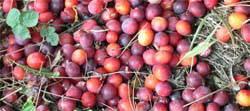
Photo: Wild cherry plums

Photo: Wild cherry plums

Here are two of our wild plum jam recipes. Wild plums taste quite tart, similar to damsons. They are excellent for jam and jelly and both are not too sweet.

The following recipes describe two methods for making wild plum jam. If your plums are barely ripe (still pretty firm) go for the first one, if they are soft and ripe go for the second. The barely ripe recipe will be have a sharper taste.

Barely ripe wild plum jam recipe:

Ingredients:
900g/2lb of barely ripe wild plums
900g/2lb of preserving sugar

Method:

  1. Wash the plums and discard any damaged fruit.
  2. Slit the plums with a knife. This will allow the stones to float to the surface during cooking so that they can be easily removed.
  3. Place plums in a non metallic bowl, sprinkle over sugar and mix to coat the plums.
  4. Cover with a clean tea cloth and leave overnight.
  5. The following day put plums and sugar into a large heavy bottomed saucepan (or preserving pan) and heat very gently until the sugar has dissolved.
  6. Bring the jam to the boil and continue to boil very rapidly for about 8-10 minutes until the jam reaches setting point. At this stage carefully remove the stones as they float up to the surface, with a slotted spoon. (What is setting point? See tricks and tips below).
  7. When the jam has set, carefully pour into warm, sterilised jars, using a ladle or small jug (How to sterilise jars? See tricks and tips below)
  8. Cover the jars with tight fitting screw-top lids, or waxed disks and cellophane pot covers (waxed disks, wax facing upwards and plastic covers secured with plastic bands).
  9. when cold and store in a cool, dark place, away from damp.

 
Ripe wild plum jam recipe:
Ingredients:
900g/2lb of ripe wild plums
900g/2lb of white granulated sugar – if you prefer a more tart jam cut the sugar by a quarter – I prefer less sugar myself
½ pint/275ml of water
Method:

  1. Wash the plums and discard any damaged fruit.
  2. Put the plums and water into a large heavy bottomed saucepan (or preserving pan) and simmer gently until the skins split and they are soft.
  3. Meanwhile, warm the sugar in a low oven for ten minutes and add to the fruit.
  4. Stir gently over a low heat until you are sure that all the sugar crystals have dissolved.
  5. Turn up the heat to its highest setting and, stirring frequently, let the fruit boil rapidly for 8-10 minutes (this is called a rolling boil).
  6. Remove the stones with a slotted spoon during the boiling process.
  7. Test for set (What is set/ setting point? See tricks and tips below).
  8. If the jam has not set, continue to boil rapidly and test at five minute intervals.
  9. When the jam has set carefully pour into warm, sterilised jars, using a ladle or small jug. (How to sterilise jars? See tricks and tips below)
  10. Cover the jars with tight fitting screw-top lids, or waxed disks and cellophane pot covers (waxed disks, wax facing upwards and plastic covers secured with plastic bands).
  11. Label when cold and store in a cool, dark place, away from damp.
  12. Tips and tricks:
    Jam “set” or “setting point”:
    Getting the right set can be tricky. I have tried using a jam thermometer but find it easier to use the following method. Before you start to make the jam, put a couple of plates in the fridge so that the warm jam can be drizzled onto a cold plate (when we make jam we often forget to return the plate to the fridge between tests, using two plates means that you have a spare cold plate). Return the plate to the fridge to cool for approx two minutes. It has set when you run your finger through it and leave a crinkly track mark. If after two minutes the cooled jam is too liquid, continue to boil the jam, testing it every few minutes until you have the right set. The jam is far more delicious if it is slightly runny.

    Sterilising the jars:
    We collect jars all year round for our jelly, chutney and jam making sessions. I try to soak off labels and store the clean jars and metal plastic coated screw-top lids in an accessible place. The sterilising method that we used is simple. Just before making the jam, I quickly wash and rinse the jars and place them upside down in a cold oven. Set the temperature to 160c/140c for fan assisted. When the oven has reached the right temperature I turn off the heat. The jars will stay warm for quite a while. I only use plastic lined lids for preserves as the all-metal lids can go rusty. I boil these for five minutes in water to sterilise them. If I use Le Parfait jars, I do the same with the rubber rings.
    Damson Jam: The recipes above work well with damsons.

Related Posts with Thumbnails
Emma Bridgewater

Britain's Next Top Model

66 Comments so far

  1. pandora norrisNo Gravatar on June 7th, 2007

    Thank you so much for a simple way to make plum jelly.
    I will enjoy doing this.
    Be blessed….

  2. fnNo Gravatar on June 8th, 2007

    Hello Pandora,

    It’s great that you are making plum jelly when over here the plums are still tiny bobbles on our trees (they finished blossoming about 3 months ago in England).

    I’d love to hear how it turns out.

  3. shellyNo Gravatar on June 12th, 2007

    Tried the ripe plum jam receipe and LOVED IT! So did the entire family. Simple and delicious. Thank You.

  4. fnNo Gravatar on June 12th, 2007

    Hi Shelly

    So pleased that you liked the recipe. Thanks for dropping by.

  5. LanieNo Gravatar on July 6th, 2007

    What is preserving sugar? Is it the same as white sugar?

  6. fnNo Gravatar on July 6th, 2007

    Preserving sugar is sugar with added pectin. This helps the jam to set. If you don’t have preserving sugar crack open a small handful of plum stones and put the kernels (in a piece of muslin) in the jam. They will help the jam to set and can be easily fished out.

    You can use ordinary granulated sugar too. It will just take longer to set.

  7. AngelNo Gravatar on August 22nd, 2007

    Thanks for the recipes! I’ll be trying the tart one tomorrow.

    Just informationally – in the U.S., jelly is clear, without pieces of fruit or peel in it – jam is thicker, and contains pieces of fruit and sometimes peel. And fruit butter (apple butter, peach butter, etc.) is not as thick as jam, and is just thickened cooked fruit pulp and sugar. Very tasty!

  8. fnNo Gravatar on August 22nd, 2007

    Hi Angel,

    Thanks for dropping by and setting me straight on the jelly/jam/fruit butter route. I have never heard of fruit butter, I think that it must be similar to our fruit cheese.

  9. cindyNo Gravatar on September 13th, 2007

    I was having some problems having the sugar harden on the bottom of the pan even with constant stirring.
    I added about 2 tbsp of water and it helped, If it won’t set what do I do?

  10. fnNo Gravatar on September 13th, 2007

    Hi Cindy,

    I’m not sure what happened to you. The sugar has to be dissolved completely before bring the jam to a rolling boil. This stops it sticking to the bottom of the saucepan.

    I hope that it worked out in the end for you.

  11. BizzylizzyNo Gravatar on December 9th, 2007

    Help! I have just opened my Damson Jam which has greenmould on top my Blackberry and Apple is the same. I removed the mould and had it this morning on toast and am still here at 3 p.m. to tell the tale. The jam jars were sterilised and it tasted OK but can anyone tell me what went wrong?

  12. fnNo Gravatar on December 9th, 2007

    Hi Bizzylizzy,

    I’ve just answered the comment that you left at 2 o’clock. I think that this is a storage problem – too cold and damp. Penicillin will develop in these conditions. It is harmless!

    If you used my recipes all my jam is fine and the jam I made a year ago is fine too.

    When I started making jam a few years ago I stored it in a tin trunk in an insulated shed. The conditions were too cold and damp and penicillin developed within a few months.

  13. BizzylizzyNo Gravatar on December 10th, 2007

    I’m sure you must be right, it is stored in my cellar which is cold and very damp. My chutney and mincemeat is fine though.

    Do you think it will be alright to remove the mould and screw the jars up again then rehouse them?

  14. fnNo Gravatar on December 11th, 2007

    Hi Bizzylizzy,

    I would move all the preserves out of the cellar immediately.

    If you want to save the jam you can’t open the lids, remove the mould and pop the lids back on. As a) The spores are tiny and you might miss some and b) you will break the seal on the jars.

    Even if you remove the mould and a layer of jam underneath there will still be teeny spores around the top of the jar that you can’t see. You could try, as an experiment, bring the jam to the boil (minus mould) and rebottling in warm sterilised jars and lids. Reboiled jam looses a lot of its freshness.

    So sorry to be a harbinger of doom.

  15. Lynn from USANo Gravatar on June 23rd, 2008

    Just wanted to let you know so you could correct this. Here in the USA (America) we call this Jam and not Jelly.
    What we call Jam has pieces of the fruit in it just like this recipe.
    What we call Jelly is where the fruit is strained after cooking and all pieces of fruit is removed, you make the jelly with Only the juice from the fruit. Therefore you end up with Jelly with no pieces of fruit in it.
    Just thought I would let you know since you have this incorrect on this page. Don’t want to confuse anyone when looking for a jelly recipe since this is in fact Jam.

  16. fnNo Gravatar on June 26th, 2008

    Hi Lynne

    Thanks for taking the time to drop by and correct my mistake. Much appreciated.

  17. [...] My Wild Plum Jelly recipe is at the bottom of this post. Click here for Wild Plum Jam. [...]

  18. Chris & DeanNo Gravatar on July 23rd, 2008

    We have made the plum jam recipe 3 times, this last week, and it is beautiful, very easy to make, and we have given some jars to friends and family, and they have loved it. Thank you for a great recipe.

  19. gaylynnNo Gravatar on August 4th, 2008

    thank u so much for your website. we recently purchased a home in northern california and found a cherry plum tree. i have changed its name to a chlum tree. had no idea really what kind of tree it was but have been enjoying the fruit considerably. it has taken me days to find a website that has exact ingredients on how to make jam with this fruit and now i know what i will be doing this week. do you have any other recipes of things i can make with this cherry plum fruit

  20. SizzlerNo Gravatar on August 29th, 2008

    Hi

    I was wondering roughly how many jars your recipe will make. Want to make sure I have enough before I try.

    Thanks

  21. fnNo Gravatar on August 29th, 2008

    Hi Sizzler

    I reckon that this will make 4-5 1lb jars.

  22. tobyNo Gravatar on September 5th, 2008

    Thank you so much found a wild plum tree right across from our country library. Could not beleive the abundance of such perfect spot free wild fruit. What is Sure Jel and how much is in a pkg. we have plain gelatin.. again happy jamming

  23. fnNo Gravatar on September 5th, 2008

    Hi Toby

    I think that sure jel is an American product – containing pectin for setting. Nothing like gelatin.

    You need neither as the plums have loads of pectin. Just follow my recipe.

  24. JanNo Gravatar on September 12th, 2008

    Hi, I followed your recipe to the latter, except that |I had 8lbs of plums that were ripe, so I used 8lbs of sugar and 1pint of water, did the set test ok too, however turned one of the jars over this morning & they all appear to be runny. should I re-boil and add pectin?

  25. fnNo Gravatar on September 12th, 2008

    Hi Jan

    If you used preserving sugar it should have helped with the set. This recipe is for barely ripe plums.

    You can boil the jam up again to get a better set. Ideally you should try and get the set right first time, as reboiling can effect the flavour a bit.

  26. SueNo Gravatar on July 2nd, 2009

    I have an abundance of wild plums this year, but many seem to have little round, brown spots on the peel. Can I use them for making jam, or should I try to remove the spots?

  27. Martin ScheureggerNo Gravatar on July 29th, 2009

    Hello!

    Thanks for this recipe, we had picked some wild plumbs and didn’t know what to do with them! Jam seemed like the perfect option, and your recipe seems to have worked very well!

    Thanks

    Martin & Kathryn

  28. Martin ScheureggerNo Gravatar on July 29th, 2009

    That should read ‘plums’!

  29. Caroline wilsonNo Gravatar on August 6th, 2009

    I made the jam with 4lbs of ripe plums and added 1pt of water according to your recipe above. I didn’t get a good set even after about 20 mins boiling the jam.I was afraid I would burn it, so put it into jars. Did I add too much water? Do you double the water if you double the amount of plums or stick to 1/2 pint of water whatever? I am confused!

  30. fnNo Gravatar on August 7th, 2009

    Hi Caroline

    Did you use 4lbs of sugar? Making double quantities is always much harder to get a set as you need a vast suacepan for a proper rolling boil. Quite often the bubbles are the depth of the jam itself. My guess is that your jam simmered rather than boiled.

  31. RobNo Gravatar on August 10th, 2009

    Hi,
    Cherry plums are dripping from the trees in Norfolk at the mo., so couldn’t resist some jam making. I attempted the barely ripe recipe with just 1 lb plums ordinary granulated sugar with mixed success : I overboiled it and it set almost solid as I couldn’t get it to wrinkle ! While I would have expected ripe fruit to have a higher liquid content, what function does the extra water perform in the “ripe” recipe ? And what would happen if I left it out ?

  32. fnNo Gravatar on August 10th, 2009

    Hello Rob

    It’s important to take the saucepan off the heat when testing for a set.

    I don’t know why you need water in the second recipe, per se, perhaps it’s because it’s a different cooking method.

    I reckon the ripe cherry plum jam is the tastier recipe. You can add water to your cement jam see here http://www.cottagesmallholder.com/?p=514.

  33. charlie IllingworthNo Gravatar on August 10th, 2009

    Thankyou for the recipies… my plums have been turned into gorgeous jam and will last me for months :)
    Cheers
    Charlie

  34. fnNo Gravatar on August 10th, 2009

    Hi Charlie

    Great that the recipe turned out well for you!

  35. littlunNo Gravatar on August 18th, 2009

    hi there, just like to add a little bit, dont have a shed or cellar, but I do have a friendly retailer who gets large polystyrene boxes with lids, a mall corner in a small garden, carefull stacking behind a tree screen and the job is done, doing the wild plum recipe now,our local council has lined somw bus lanes with trees, red and yellow plums, crab apples trees, and blackberry bushes throughout, wonderful! many thanks.

  36. Jan in CornwallNo Gravatar on August 19th, 2009

    Hi
    Thank you so much for the super wild plum recipe – my husband appeared at the back door with a whole bowl of these little fruit (like a tiny Victoria?) and asked if they were any use, so…………and yes they made 4/5 jars of beautifully set (I could turn the jar upside down with no movement!), slightly tart and a little bitter edge, gorgeous jam which I reckon will suit toast or chees or even a slice of ham!

  37. littlunNo Gravatar on August 20th, 2009

    Me again,
    just to say I finished the jam with the help of the grand daughters, made up to just under 8 pounds, more than enough to last all winter. Reduced sugar, hubby is slightly diabetic,so ’tis a bit less thick, but the practice nurse wants another jar, lovely stuff, sets the morning work run off with a treat. Many thanks. Just finishing the green tomato chutney, does anyone have a glass jar tree?
    Thanks again for a smashing recipe.

  38. Annie in YorkshireNo Gravatar on August 22nd, 2009

    I now have 6 beautiful ruby red jars of absolutely gorgeous cherry plum & miribelle jam sitting on my dresser cooling. I followed your recipe for the ripe plums, using 1Kg preserving sugar and 1kg fruit, no water but I added half a cinnamon stick to the boiling jam, which seems to take that slightly bitter edge off. A few years ago I made plum jelly with your recipe and also used your jar sterilisation method – the jelly is still mould-free and delicious! Oh, and the Damson gin from the same year is…sinful!

  39. ruthNo Gravatar on August 25th, 2009

    For future reference, any jams that have mold on the surface should be discarded immediately, not eaten… and certainly not rebottled!
    Yes, you survived, but that does not mean that the practice is safe or healthy. The molds that form on jam could be producing a mycotoxin, which have been linked to certain cancers, not just to food-poisoning. Microbiologists recommend against scooping out the mold and using the remaining condiment, as it is not possible to know how far the mold has penetrated. Improperly sterilised or sealed preserves can also harbour the bacterium that causes botulism if the acid content isn’t high enough.
    Please, research the issue and be more careful!
    I know it’s sad to have to throw away something you worked so hard on — I’ve had to discard batches in the past, and it’s heart-breaking — but better that than making myself, or, worse, someone I love, seriously ill.

  40. plum & apple jam. « on August 26th, 2009

    [...] are currently swimming in plums, so they bought a few round for us! I used a recipe I found on The Cottage Smallholder & tweaked it a bit for the quantities I had.. (I also added some apples). & it seems to [...]

  41. CharlieNo Gravatar on August 26th, 2009

    Thankyou so much for this recipe! I now have two (rapidly vanishing) jars of yummy plum jam!

  42. TheaNo Gravatar on August 31st, 2009

    So delighted to have found your site and, in particular, this recipe. This is my first year with an allotment and we had a lovely crop of plums. Prior to this recipe I had tried three different ways of making jam and was disheartened that none of them came out right. Now I have tasty jam to give to friends and relatives but most importantly a sense of achievement that I grew something then made something with it. Hurrah! Many thanks.

  43. quackerzNo Gravatar on August 31st, 2009

    Ripe wild plum Jam – I have just made 6lbs of this with the dark cherry plums I am flooded with in the garden . I also have the yellow type which I have made the Plum & Tamarind Chutney – superb!!The ripe jam I tweaked and instead of the water I did 2/3rds port water. It is great even though it took forever to skim all the stones from the plums. I am now going to go for the Sloe gin and vodka and perhaps try the blackberry whisky!

  44. tNbNo Gravatar on September 4th, 2009

    Just stumbled across your site this morning, I look forward to reading more! Off to pick some wild plums … :-)

  45. fnNo Gravatar on September 4th, 2009

    Hello Littlun

    Great that the recipe worked for you. Letting your grandchildren help makes it especially good!

    Using polystyrene boxes to store preserves is a brilliant idea. Thanks.

    Love the idea of a glass jar tree!

    Hi Jan in Cornwall

    Yes I reckon that the little wild, cherry plums make the best jam and chutney. Thanks for leaving a comment.

    Hi Annie

    Thanks so much for your feedback. Must try your trick with the cinnamon stick.

    Yes the damson gin is a wicked brew.

    Hello Ruth

    Thanks so much for your advice great to know what the scientific thinking is on this point. I must admit I never try and resuscitate mouldy preserves having been given them endlessly as a child – yuk.

    Hi Charlie

    Great news. There’s nothing like homemade.

    Hi Thea

    I’m really pleased that my recipe worked for you. Thanks for your feedback.

    Hello Quackerz

    So pleased that you tried the plum and tamarind chutney. I made my second batch after 2 weeks! Great idea adding port to the jam. Hope your liqueurs bring you joy!

    Hi tNB

    Thanks for such an enthusiastic response. I have 2 kilos of wild plums in the kitchen and I think I’m going to make jam this time.

  46. garyNo Gravatar on September 7th, 2009

    Interesting reading your plum recipes, prompted a couple of thoughts:
    1. We never use preserving sugar, as it’s cheaper to make or buy the pectin ourselves. Tate & Lyle granulated is 69p per kilo in “Savers” – the high street chemist.
    2. This year we started buying “New” jars. We paid £20 for 72 jars and lids (www.colorlites.com). Thats pretty cheap if you ask me!
    3. We get labels from “Lakeland” stores. I think they are £2.75 for 76 labels. Its great when all the jars look the same!

  47. KellyNo Gravatar on September 14th, 2009

    Another way to test the jam’s readiness is with a wooden spoon. Stir the jam/jelly with a wooden spoon. Pull out the spoon and hold it so the jam/jelly drips down the edge of it. If the jam/jelly drops meet and then come off the spoon, it is ready. If they ’sheet’ off or come off too quickly, they aren’t ready. I wish I could explain it better, or better yet, show you!

  48. fnNo Gravatar on September 15th, 2009

    Hi Gary

    I’ve given up using preserving sugar as I don’t like the taste that it imparts. I must check out Savers – that’s a good price.

    Also thanks for the link to jars – great price again and the labels :)

    Hi Kelly

    I can see (in my mind’s eye) what you are saying.

    Thanks so much for your advice.

  49. IrisNo Gravatar on September 16th, 2009

    Hi Fiona

    I have just used the second recipe to make damson jam, as you suggested – it’s delicious. And so easy! Thank you for pointing me in the right direction.

    If you prefered a sligtly more tart taste to the jam, cold you use less sugar but still follow the recipe in exactly the same way?
    Also, does this recipe work for other fruits?

  50. IrisNo Gravatar on September 16th, 2009

    Sorry, that should read ‘could you use less sugar’?

  51. fnNo Gravatar on September 16th, 2009

    Hi Iris

    Yes you can use less sugar. If I did that I’d add some lemon juice (1 tbsp) and then taste ( and adjust sugar if too tart) before bringing up to the boil to ensure a good set.

  52. IrisNo Gravatar on September 16th, 2009

    Thanks Fiona

    Fortunately we have a bumper crop of damsons this year so will look forward to experimenting.

  53. bertha henrettyNo Gravatar on September 20th, 2009

    Hi
    Made your very easy recipe but find it too sweet, is there anyway to sort this with my current batch?
    Thanks
    Bertha

  54. fnNo Gravatar on September 20th, 2009

    Hi Bertha

    Add lemon juice and adjust the sugar down next time.

  55. angelaNo Gravatar on September 20th, 2009

    hi there, thanks for the easy recipe, i have tried making jam before and it was a nightmare!, how long is it best to leave the jam before opening and trying it out? many thanks angela

  56. fnNo Gravatar on September 21st, 2009

    Hello Angela

    The jam can be eaten immediately.

  57. bertha henrettyNo Gravatar on September 21st, 2009

    Thanks
    How much lemon juice?
    Bertha

  58. fnNo Gravatar on September 22nd, 2009

    Hi Bertha

    I’d add the lemon juice incrementally a teaspoon at a time until it tastes right to you.

  59. Eddie LloydNo Gravatar on November 8th, 2009

    Hi !

    I have just joined and would appreciate it if anyone can help me with a problem encountered with above recipe for ripe plum jam please ?

    As it was my first attempt at jam making I followed steps carefully but after setting and checking the jam a few days after it tasted great but when chewing the pulpy skins it had a slight bitter taste.

    Being concerned about health and the risk of food poisoning I have thrown the batch away and would like to try again without the bitter taste !

    I was quite proud of the result as it set beautifully but the taste wasn’t quite right.

    Regards . . . Eddie Lloyd ( aka Nuisance ! )

  60. fnNo Gravatar on November 8th, 2009

    Hi Eddie

    Did you make this recently as the plums were all gone weeks ago.

    You could have been using wild damsons or even sloes.

    The skins of wild plums shouldn’t have a bitter taste.

    Need more information to help.

  61. Jane from NZNo Gravatar on December 18th, 2009

    Well I have just made my very first ever batch of plum (and blackberry) jam. We don’t have wild plums near us so I used the plums from the tree in our garden and it looks delicious. i’m waiting for it to set and can’t wait to give it (all going well) to family for Xmas.

    Next up- the mango chutney recipe!

  62. fnNo Gravatar on December 19th, 2009

    Hello Jane

    Making jam is such fun! I bet yours tastes great!

  63. AlexisNo Gravatar on January 1st, 2010

    why dont u need any water in plum jam

  64. mary lou carsonNo Gravatar on July 27th, 2010

    I live in Brownwood Texas USA I just found wild plums here will be making your jam recipes Mary Lou Carson

  65. clairthechocholicNo Gravatar on August 2nd, 2010

    Hi, i’ve been give a bag of Victoria plums and plan to make plum jam/cheese, i made lots of jam last year from wild plums but my kids won’t eat it as too many skins, wondering if i could strain it like cheese but want to make it more like jam is this possible and what recipe should i follow.
    Thanks Clair

  66. American in ChiantiNo Gravatar on August 8th, 2010

    I have a home in Chianti where we have lots of wild plum trees. I’ve made plum jam for the past five years, with some hits and misses. These recipes look very simple and straightforward and I like the distinction made between the states of ripening of the fruit. I’m getting started right now. Thanks!

Leave a reply

Subscribe without commenting